
Interest Rate Reduction Requirement for IRRRL

Interest Rate Reduction Requirement for IRRRL
A core requirement of the Interest Rate Reduction Refinance Loan (IRRRL) is that the refinance must provide a tangible benefit to the borrower, most commonly through a reduction in the interest rate. The VA established this rule to ensure the IRRRL truly improves the loan terms rather than simply replacing one mortgage with another. By requiring a meaningful interest rate or payment benefit, the IRRRL helps eligible veterans and service members achieve real monthly savings and long-term financial advantages.
The interest rate reduction requirement for IRRRL ensures that the refinance provides a lower interest rate than the existing VA loan, helping borrowers save on monthly payments.
The Interest Rate Reduction Refinance Loan (IRRRL), frequently referred to as a “streamline” refinance, is a VA-guaranteed product specifically designed to help Veterans replace an existing VA-backed home loan with a new one. The primary objective of an IRRRL is either to reduce the borrower’s monthly mortgage payment by securing a lower interest rate or to stabilize the payment by transitioning from an adjustable or variable rate to a stable fixed-rate mortgage. Because this loan type is intended to be simplified and efficient, it generally requires no new appraisal, credit information, or income underwriting, provided the loan remains current.
The Fundamental Interest Rate Mandate
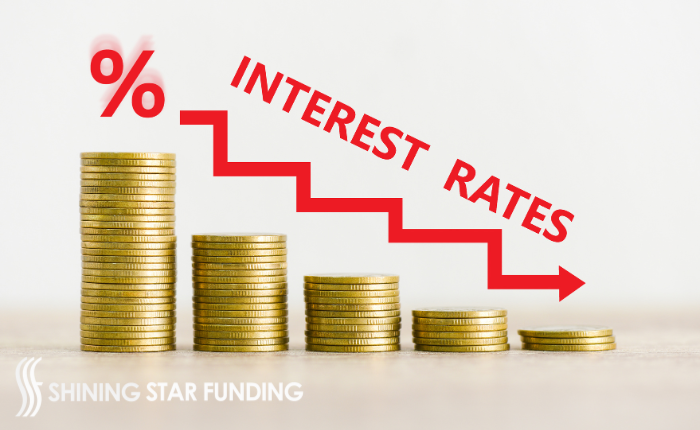
The core regulatory requirement for an IRRRL is that the new loan must bear a lower interest rate than the existing VA loan it is replacing. This mandate ensures that the refinance provides a tangible financial benefit to the Veteran. This rule applies to most standard refinances, including those moving from a fixed-rate to another fixed-rate mortgage.
However, a critical exception to the interest rate reduction requirement: if the loan being refinanced is an Adjustable Rate Mortgage (ARM), the interest rate on the new IRRRL may legally be higher than the current rate. This exception exists to allow Veterans to move from the uncertainty of a variable interest rate to the long-term security of a fixed-rate payment, even if that stability comes at the cost of a slightly higher rate.
Monthly Payment Reduction and Exceptions
Mirroring the interest rate requirement, the principal and interest (P&I) payment on an IRRRL must generally be less than the P&I payment of the loan being refinanced. Despite this general rule, there are three specific scenarios where a Veteran’s monthly payment may legally increase:
- Refinancing an ARM: As noted, moving to a fixed rate may involve a higher interest rate and, consequently, a higher payment.
- Shortening the Loan Term: If a Veteran chooses to reduce the remaining term of the loan (for example, moving from a 30-year to a 15-year mortgage), the monthly payment will typically rise even if the interest rate is lower.
- Including Energy Efficiency Improvements: Veterans may add up to $6,000 to their IRRRL for qualifying energy-related upgrades, which can cause the total monthly payment to increase.
Underwriting Requirements for Significant Increases
While standard IRRRLs require no credit or income underwriting, a significant increase in the monthly payment triggers a mandatory review. If the new monthly payment (including principal, interest, taxes, and insurance—PITI) increases by 20% or more over the previous payment, the lender must perform a more rigorous evaluation. In these cases, the lender must determine and certify that the Veteran qualifies for the higher payment from an underwriting standpoint, ensuring they can support the new proposed shelter expense and other recurring obligations with their stable and reliable income.
Transparency and the Veteran’s Acknowledgment Statement
To ensure Veterans fully understand the financial impact of the transaction, they must sign a Statement of Recoupment. This document provides transparency by explicitly showing:
- The interest rate and monthly payments for the new loan compared directly to the old VA loan.
- The recoupment period, which is a calculation of how many months it will take for the monthly savings to cover all closing costs associated with the loan, including those financed into the loan amount and those paid out of pocket.
For example, if a Veteran’s monthly payment decreases by 50??buttheyincur??5,000 in total closing costs, the statement would identify that it will take 100 months to recoup that investment.


Lender Flexibility in Setting Rates
Lenders have the flexibility to set the interest rate high enough to cover the Veteran’s closing costs. This allows Veterans to complete a refinance with no out-of-pocket expenses by trading a slightly higher (but still reduced) interest rate for the lender’s payment of all closing fees. Regardless of the strategy used, the lender must ensure that the final loan meets the requirements for a lower interest rate and payment, unless one of the aforementioned regulatory exceptions applies. Additionally, while a lender may charge any reasonable amount of discount points to lower the rate, no more than two discount points can be financed into the IRRRL loan amount; any excess must be paid in cash.
FAQ's
Generally, the law requires that an IRRRL must result in a lower monthly principal and interest (P&I) payment. However, there are three specific scenarios where a payment increase is permitted: when refinancing an Adjustable Rate Mortgage (ARM), when shortening the loan term (such as moving from a 30-year to a 15-year mortgage), or when including energy efficiency improvements. In these instances, the Veteran may prioritize faster equity building or home upgrades over immediate monthly relief. If the total monthly payment increases by 20 percent or more, the lender must perform full credit underwriting.
The VA actively monitors the market for misleading advertisements that target Veterans with unrealistic interest rate offers. Lenders must refrain from claiming they have a “special relationship” with the VA or using language that implies an offer is coming directly from the government. Advertisements suggesting that Veterans can “skip” payments or get interest rates that sound too good to be true are often considered red flags for irresponsible lending practices. The VA insists that lenders avoid any practices that might induce Veterans to take actions contrary to their best financial interests.
For a standard IRRRL, a new Certificate of Eligibility (COE) is generally not required if the lender can verify the Veteran’s existing VA loan. Because the IRRRL is a “VA-to-VA” transaction, the VA’s computer systems will only generate a case number if there is an active record of a prior VA-guaranteed loan on the property. Successful receipt of a case number serves as evidence of the prior use of entitlement. Lenders may still ask for the original COE or use an email confirmation procedure to verify that the Veteran remains eligible for the benefit.
Veterans are allowed to negotiate discount points with their lender to “buy down” the interest rate on an IRRRL. While any reasonable amount of points can be charged, the VA imposes a strict limit on how many points can be financed into the loan amount. Currently, a maximum of two discount points can be included in the new mortgage balance. If the Veteran wishes to pay more points to secure an even lower rate, they must pay the remaining amount in cash at closing. This restriction prevents the excessive inflation of the Veteran’s total debt.
Lenders and borrowers are expected to honor any interest rate lock-in agreements entered into during the application process. However, the VA does not object to changes in the agreed-upon rate as long as no existing agreements are violated. If the interest rate increases by more than one percent between the initial application and the final closing, the lender must re-underwrite the loan. This is necessary to confirm the Veteran still qualifies for the mortgage under the more expensive terms. A new or corrected loan application must also be initialed and dated by the borrower.
Including Energy Efficient Mortgage (EEM) improvements in an IRRRL is a rare exception allowed for increasing a Veteran’s monthly payment. Veterans may add up to $6,000 to their loan balance to cover the cost of qualifying green upgrades, such as solar heating or insulation. Because this increases the total principal amount, the monthly mortgage payment may rise. The lender must determine that any increase in the monthly payment is likely to be offset by a reduction in monthly utility costs. This balance ensures the Veteran receives a genuine financial advantage.
While an IRRRL typically requires a lower interest rate, the monthly payment may increase if the Veteran chooses to significantly shorten the loan term. For example, moving from a 30-year mortgage to a 15-year mortgage often results in a higher principal and interest payment even if the interest rate is lower. In this scenario, the VA permits the payment increase because the Veteran is building home equity much faster than under the original terms. If this change causes the total monthly payment to rise by 20 percent or more, the lender must certify the Veteran’s ability to qualify.
For every IRRRL, the Veteran must sign a specific statement acknowledging how the refinance impacts their financial situation. This statement must explicitly compare the interest rate and monthly payments of the new loan against the terms of the existing VA mortgage. Additionally, the document must include a calculation of the recoupment period, showing how many months of savings are required to cover the total closing costs. This process ensures the Veteran makes an informed decision regarding the actual economic benefit of the new interest rate and associated fees.
Refinancing a VA Adjustable Rate Mortgage (ARM) or a hybrid ARM into a fixed-rate mortgage is a standard use for the IRRRL program. In this specific case, the typical requirement for a lower interest rate is waived. The VA permits the new fixed rate to be higher than the current interest rate of the ARM. This flexibility is granted because the primary objective shifts from immediate savings to achieving permanent payment stability. By locking in a fixed rate, the Veteran is protected against future market fluctuations that could significantly increase a variable rate.
The core rule for an Interest Rate Reduction Refinance Loan (IRRRL) is that the new interest rate must be lower than the rate on the existing VA loan. This fundamental requirement ensures the Veteran receives a clear financial benefit from the transaction. However, a specific exception exists: if you are refinancing an Adjustable Rate Mortgage (ARM) into a fixed-rate loan, the new fixed interest rate is permitted to be higher than the current variable rate. This exception acknowledges the value of achieving long-term payment stability over immediate monthly savings.

527 Sycamore Valley Rd W, Danville, CA 94526
Toll Free Call : (866) 280-0020
For informational purposes only. No guarantee of accuracy is expressed or implied. Programs shown may not include all options or pricing structures. Rates, terms, programs and underwriting policies subject to change without notice. This is not an offer to extend credit or a commitment to lend. All loans subject to underwriting approval. Some products may not be available in all states and restrictions may apply. Equal Housing Opportunity.
Interactive calculators are self-help tools. Results received from this calculator are designed for comparative and illustrative purposes only, and accuracy is not guaranteed. Shining Star Funding is not responsible for any errors, omissions, or misrepresentations. This calculator does not have the ability to pre-qualify you for any loan program or promotion. Qualification for loan programs may require additional information such as credit scores and cash reserves which is not gathered in this calculator. Information such as interest rates and pricing are subject to change at any time and without notice. Additional fees such as HOA dues are not included in calculations. All information such as interest rates, taxes, insurance, PMI payments, etc. are estimates and should be used for comparison only. Shining Star Funding does not guarantee any of the information obtained by this calculator.
Privacy Policy | Accessibility Statement | Term of Use | NMLS Consumer Access
CMG Mortgage, Inc. dba Shining Star Funding, NMLS ID# 1820 (www.nmlsconsumeraccess.org, www.cmghomeloans.com), Equal Housing Opportunity. Licensed by the Department of Financial Protection and Innovation (DFPI) under the California Residential Mortgage Lending Act No. 4150025. To verify our complete list of state licenses, please visit www.cmgfi.com/corporate/licensing