
Modular Home Prices
Mastering the Math of Modular Home Prices in 2026
For many aspiring to join the ranks of homeownership, the modern housing market can feel like a labyrinth of soaring costs and limited inventory. As we navigate through 2026, a significant shift is occurring in how we define a “dream home.” The traditional stick-built structure, while still prestigious, is increasingly sharing the spotlight with modular construction. This evolution isn’t just about efficiency; it’s a strategic move for savvy individuals—ranging from first-time homebuyers looking for an entry point to real estate investors seeking scalable assets. Understanding modular home prices is no longer just a niche interest; it is a core component of contemporary financial planning for anyone serious about property acquisition.
The appeal of modular homes lies in their unique blend of precision engineering and cost predictability. Unlike traditional builds that often suffer from weather delays and fluctuating labor costs, modular units are constructed in climate-controlled environments. For the self-employed home buyer whose time is literally money, or the retiree looking to maximize their nest egg, the speed and transparency of this process are invaluable. However, to truly succeed in the homeownership journey, one must look beyond the initial “sticker price” and analyze the full economic ecosystem of a modular project. This involves a deep dive into land preparation, logistics, and the specific variables that dictate the final closing costs.
How Much are Modular Homes?
When you first begin your research, you will likely encounter a “base price” that seems remarkably low. It is crucial to understand that in the realm of modular construction, the price of the home itself is only one piece of the puzzle. On average, a basic modular home unit—the actual structure built in the factory—can range from $100,000 to $250,000. However, the total cost to move in, commonly referred to as the “turnkey price,” typically falls between $160,000 and $500,000 depending on the complexity of the project.
For those focused on homeownership as a long-term investment, the value proposition is clear: modular homes generally cost 10% to 20% less than comparable stick-built homes. This price gap is primarily driven by factory efficiencies and reduced waste, not by a sacrifice in quality. In fact, because modular homes must be transported over highways, they are often built more robustly than traditional homes to withstand the stresses of transit. For first-time homebuyers, this means entering the market with an asset that is both affordable and structurally superior.
Average Cost of a Modular Home by Square Foot
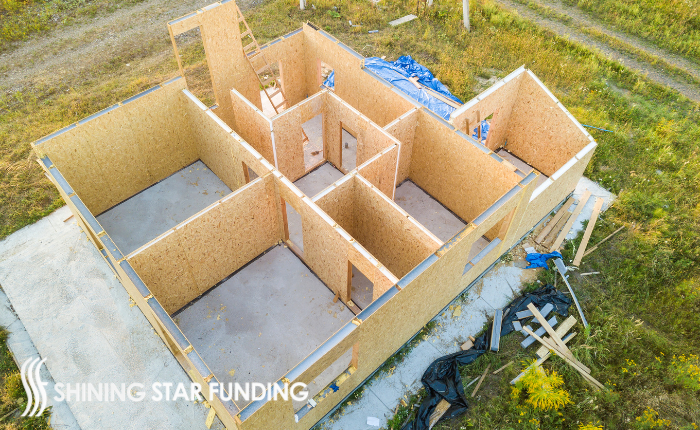
o provide a more granular look at the investment, we can break down costs by square footage. In 2026, the industry has settled into a tiered pricing structure that helps buyers budget with precision. Here is how the numbers typically break down for a finished, installed home:
- Standard/Basic Quality: $100 – $150 per square foot
- Mid-Range/Customized: $150 – $220 per square foot
- Luxury/High-End: $220 – $350+ per square foot
It is important for asset-rich individuals and investors to note that these figures usually include the “set and finish” work—meaning the crane rental, the foundation, and the utility hookups. If you see a quote for $60 per square foot, you are almost certainly looking at the price for the module alone, excluding delivery and site work. True homeownership costs must account for the 60/40 rule: approximately 60% of your budget goes to the factory for the home, while the remaining 40% covers land prep, local permits, and finishing touches.
Average Total Cost of a Modular Home by Type
| Home Type | Typical Square Footage | Average Total Cost (Finished) |
|---|---|---|
| Tiny Modular / ADU | 400 – 800 sq. ft. | $45,000 – $120,000 |
| Ranch (Single Story) | 1,200 – 1,800 sq. ft. | $180,000 – $320,000 |
| Two-Story / Cape Cod | 2,000 – 3,000 sq. ft. | $300,000 – $550,000 |
| Modular Duplex (Investor Model) | 2,000 – 2,500 sq. ft. | $250,000 – $480,000 |
Factors That Influence Modular Home Cost
Beyond the blueprints, several external factors can shift your budget. If you are a self-employed home buyer, you know that hidden variables are the enemy of a good business plan. In the homeownership process, these variables include:
- Location and Distance: Modular factories are large regional hubs. If your land is 500 miles from the factory, your transportation fees—including pilot cars and oversized load permits—will be significantly higher than if you were 50 miles away.
- Site Preparation: This is often the biggest “wildcard.” Clearing a flat, grassy lot is inexpensive. Excavating a rocky hillside or managing complex drainage on a wooded site can add $10,000 to $40,000 to your total cost.
- Foundation Choice: A simple crawl space is the budget-friendly choice. However, if you want a full finished basement to increase your home’s future resale value, expect to add $30,000 to $60,000 to the project.
- Customization and Finishes: Just like a traditional home, the cost of “hard finishes”—countertops, flooring, and appliances—can vary wildly. High-end real estate investors often opt for quartz and hardwood to attract premium tenants, which increases the upfront modular home prices but pays off in long-term equity.
[Image of modular home foundation types]

How to Cover the Cost of a Modular Home
Financing a modular home is different than buying an existing house, but it has become much more streamlined in recent years. Because the house isn’t “there” yet, you cannot use a standard mortgage immediately. Instead, most buyers use a construction-to-permanent loan. This is a “two-in-one” loan that covers the construction phase with interest-only payments and then automatically converts into a traditional 15- or 30-year mortgage once the local building inspector issues a certificate of occupancy.
For first-time homebuyers, this process requires working with a lender familiar with modular milestones. The lender will pay the factory in “draws” as specific stages of the build are completed. If you are an asset-rich individual, you might choose to pay for the land and site prep in cash, using a smaller mortgage for the structure itself to keep your debt-to-income ratio favorable. Self-employed individuals should be prepared to provide two years of tax returns and a year-to-date profit and loss statement, as lenders will look closely at income stability during the construction period.
Achieving homeownership through modular construction is a brilliant way to bypass the bidding wars of the resale market. By understanding the nuances of modular home prices, you can build a high-quality, energy-efficient home that fits your budget and your lifestyle perfectly. Whether you are seeking a quiet retirement retreat or a high-performing investment property, the modular path offers a degree of control and value that is hard to find elsewhere in today’s real estate environment.
FAQ's
Contrary to older myths, modern modular homes appreciate at essentially the same rate as traditional stick-built homes. Because they follow the same building codes and are classified as real property once affixed to a foundation, they are a stable long-term investment.
Almost never. When you see an advertised “base price” for a modular home, it typically covers only the manufacturing of the modules. You must purchase the land separately. In 2026, the average cost of an acre of land is roughly $13,000, though this varies wildly by region.
Yes. In 2026, modular homes are eligible for:
FHA Loans: 3.5% down payment; ideal for those with lower credit scores.
VA Loans: 0% down payment for veterans.
USDA Loans: 0% down payment for rural and some suburban developments. The home must meet HUD guidelines and be permanently affixed to the land you own to qualify.
Modular homes are classified similarly to site-built homes, giving you access to standard mortgage products. The most common route is a Construction-to-Permanent Loan. This starts as a short-term loan to pay the builder in “draws” and automatically converts to a 15- or 30-year fixed mortgage once the home is finished and inspected.
Beyond the size of the house, several 2026-specific factors drive costs:
Customization: Standard packages are affordable, but custom quartz countertops or hardwood floors can add $50 to $150 per square foot.
Smart Home Integration: Factory-installed automation systems (climate, security, energy) add $2,500 to $5,000 upfront.
Energy Efficiency: Solar-ready roof trusses and triple-glazed windows for colder climates are premium additions but lower long-term homeownership costs.
Logistics: If your site is more than 100 miles from the factory, transportation and crane fees can increase by $10,000 to $30,000.
To qualify as “real property” and secure traditional financing, your modular home must be permanently affixed to a foundation.
Slab Foundation: $6,000 – $12,000.
Crawl Space/Pit: $10,000 – $18,000.
Full Basement: $18,000 – $40,000.
The modules are built in a factory, but your land must be ready to receive them. When preparing to buy, allocate funds for:
Land Clearing and Grading: $4,000 – $11,000.
Utility Connections (Water, Power, Septic): $5,000 – $30,000.
Permits and Impact Fees: $2,000 – $10,000 depending on your local jurisdiction.
In the 2026 market, the style of your modular home significantly dictates the final price tag:
| Modular Home Style | Typical Square Footage | 2026 Estimated Total Cost |
| Tiny Modular Home | 200 – 800 sq. ft. | $50,000 – $95,000 |
| Ranch/Single-Story | 1,200 – 2,000 sq. ft. | $130,000 – $265,000 |
| Chalet/Cape Cod | 1,400 – 2,200 sq. ft. | $180,000 – $340,000 |
| Two-Story Family | 1,800 – 2,800 sq. ft. | $210,000 – $420,000 |
| Luxury Custom | 3,000+ sq. ft. | $500,000 – $850,000+ |
For a finished modular home, expect to pay between $80 and $175 per square foot.
Base Modules Only: $50 – $100 per square foot.
Mid-Range Finished: $110 – $140 per square foot.
Premium/Luxury Finished: $150 – $250+ per square foot. For comparison, traditional “stick-built” homes in 2026 often start at $150 to $300 per square foot, making modular homes roughly 10% to 25% more affordable on average.
The average modular home in 2026 typically ranges between $160,000 and $320,000 for a fully installed residence. While the base modules themselves might start as low as $50,000, the “turnkey” price—including delivery, site work, and finishing—averages around $240,000 nationwide. Luxury or highly customized units can exceed $700,000.

527 Sycamore Valley Rd W, Danville, CA 94526
Toll Free Call : (866) 280-0020
For informational purposes only. No guarantee of accuracy is expressed or implied. Programs shown may not include all options or pricing structures. Rates, terms, programs and underwriting policies subject to change without notice. This is not an offer to extend credit or a commitment to lend. All loans subject to underwriting approval. Some products may not be available in all states and restrictions may apply. Equal Housing Opportunity.
Interactive calculators are self-help tools. Results received from this calculator are designed for comparative and illustrative purposes only, and accuracy is not guaranteed. Shining Star Funding is not responsible for any errors, omissions, or misrepresentations. This calculator does not have the ability to pre-qualify you for any loan program or promotion. Qualification for loan programs may require additional information such as credit scores and cash reserves which is not gathered in this calculator. Information such as interest rates and pricing are subject to change at any time and without notice. Additional fees such as HOA dues are not included in calculations. All information such as interest rates, taxes, insurance, PMI payments, etc. are estimates and should be used for comparison only. Shining Star Funding does not guarantee any of the information obtained by this calculator.
Privacy Policy | Accessibility Statement | Term of Use | NMLS Consumer Access
CMG Mortgage, Inc. dba Shining Star Funding, NMLS ID# 1820 (www.nmlsconsumeraccess.org, www.cmghomeloans.com), Equal Housing Opportunity. Licensed by the Department of Financial Protection and Innovation (DFPI) under the California Residential Mortgage Lending Act No. 4150025. To verify our complete list of state licenses, please visit www.cmgfi.com/corporate/licensing