
Fixed Rate Heloc

Unlocking the Power of Predictability: The Ultimate Guide to the Fixed Rate HELOC
In the dynamic landscape of 2026, the concept of building wealth through your property has shifted from a passive endeavor into a highly strategic game. As home values in many regions remain resilient, homeowners are sitting on a gold mine of untapped potential. However, with the global economy still adjusting to the “higher for longer” interest rate environment, the traditional methods of accessing that cash have evolved. For many, the choice is no longer just between a lump-sum loan and a credit line; it is about finding a hybrid solution that offers both the flexibility to spend and the security of a locked-in payment. This intersection of stability and access is where a unique financial tool has become the cornerstone of modern property management.
Whether you are among the first-time homebuyers who have finally seen significant appreciation in your starter home or a self employed home buyer looking for a capital cushion for your business, understanding the nuances of your equity is vital. Real estate investors and asset-rich individuals seeking for real estate investments often use these specialized credit lines to fund their next acquisition without disturbing their primary mortgage. Even retirees looking for a steady stream of funds for home modifications find that the category of equity and home finance offers more security than ever before. By mastering the fixed rate home equity line of credit, you can transform your house from a simple shelter into a sophisticated financial engine that powers your future.
What is a Fixed-Rate HELOC?
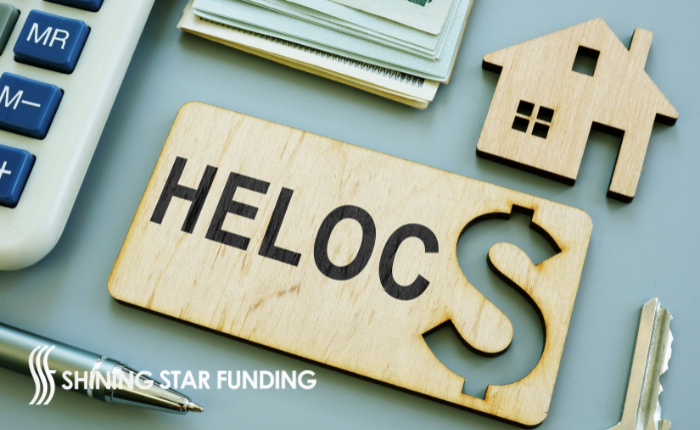
A fixed rate heloc is a powerful financial hybrid. Traditionally, a Home Equity Line of Credit (HELOC) functions like a credit card secured by your house; it has a variable interest rate that fluctuates based on the prime rate. If the Federal Reserve raises rates, your monthly payment goes up. A fixed-rate version, however, allows you to “lock in” the interest rate on all or a portion of the funds you draw from the line. This means that even if market rates spike in 2027 or beyond, your specific balance remains shielded from those increases.
In the broad category of equity and home planning, this tool is often called a “convertible” or “hybrid” HELOC. It provides the best of both worlds: you have a revolving credit limit that you can tap into whenever you need, but you also have the option to convert those borrowed funds into a fixed-rate loan with a predictable repayment schedule. For those who are risk-averse but still want the flexibility of a line of credit, this is the ultimate safeguard against an unpredictable economy.

Fixed-Rate HELOCs at a Glance
As of April 2026, heloc fixed rates have become increasingly popular as homeowners look to protect their budgets from the lingering inflation of the mid-2020s. While standard HELOC rates currently average around 7.07%, many lenders offer the ability to lock in a fixed rate that is slightly higher in exchange for long-term peace of mind. Here is a quick breakdown of how these products typically stack up in the current market:
- Draw Period: Typically 10 years, during which you can borrow and repay as needed.
- Repayment Period: Usually 15 to 20 years, during which you can no longer draw funds and must pay back the principal and interest.
- Conversion Options: Many lenders allow you to have multiple “fixed-rate locks” at the same time for different projects.
- Collateral: Your home serves as the security for the loan, which is why lenders can offer lower rates than personal loans.
How Do Fixed-Rate HELOCs Work?
The process starts with a standard application based on your home’s appraised value and your current mortgage balance. Once approved, you are given a maximum credit limit. When you decide to use the money—perhaps for a major kitchen remodel or to consolidate high-interest debt—you have a choice. You can leave the balance on the variable rate, which might start lower but can rise, or you can exercise your “lock” option. When you lock it, that specific amount is carved out into a fixed-rate sub-loan within your HELOC.
For retirees or those on a fixed income, this functionality is a lifesaver. You can keep a line of credit open for emergencies at no cost (if you don’t use it), but the moment you need to draw $20,000 for a new roof, you can immediately lock in one of the great rates for a convertible fixed rate heloc. This ensures that your monthly budget remains consistent, regardless of what the headlines say about the economy. It is a proactive approach to the category of equity and home management that puts the homeowner back in the driver’s seat.
Advantages and Disadvantages
No financial product is a “one size fits all” solution. Understanding the trade-offs is essential for a successful long-term strategy.
Advantages:
- Predictable Payments: You know exactly what your monthly bill will be, making it easier to manage cash flow.
- Rate Protection: You are immune to the Federal Reserve’s interest rate hikes once your balance is locked.
- Interest-Only Options: Some lenders allow interest-only payments during the draw period, even on fixed segments.
- Flexible Borrowing: You only pay for what you use, unlike a standard home equity loan which gives you a lump sum upfront.
Disadvantages:
- Higher Starting Rates: Fixed rates are often 0.5% to 1% higher than the initial variable rate.
- Lock Fees: Some lenders charge a small fee (e.g., $50 to $100) every time you exercise a fixed-rate lock.
- Availability: Are there fixed rate home equity loans? Yes, but fixed-rate HELOCs are a specialized product and not every bank offers them.
- Complexity: Managing multiple “locks” at different rates within one account requires a bit more record-keeping.
How to Convert an Existing HELOC to a Fixed HELOC
If you already have a variable-rate line of credit and are worried about rising costs, you don’t necessarily have to start over. Many modern agreements already contain a “convertible” clause. Here is the step-by-step process to secure your rates.
1. Consider Your Options
Review your current balance and your plans for the future. If you plan to pay off the balance in the next 12 months, a variable rate might be cheaper. However, if you are looking at a 5-year or 10-year repayment plan, searching for great rates for a convertible fixed rate heloc is the smarter move. Calculate your “break-even” point to see if the higher fixed rate is worth the security.
2. Talk with Your Current Lender or Shop Around
Call your current servicer and ask if your existing agreement allows for fixed-rate “buckets.” If it doesn’t, you may need to refinance your HELOC with a different institution. This is a common strategy for real estate investors who want to consolidate multiple lines of credit into one stable payment. Don’t be afraid to ask, “are there fixed rate home equity loans or HELOCs that fit my specific debt-to-income ratio?”
3. Apply for Your HELOC
If you are starting fresh or switching lenders, you will undergo a full underwriting process. This includes a home appraisal, a credit check, and income verification. For self employed home buyers, ensure your tax returns for 2024 and 2025 are organized, as lenders in 2026 are particularly focused on stable cash flow and debt-to-income levels.
4. Close on Your Loan
Once approved, you will sign the final documents. There is typically a three-day “right of rescission” period where you can change your mind. After that, your line is active. You can then log into your online portal, select the amount you’ve drawn, and click “Convert to Fixed Rate.” From that moment on, your rate is shielded.
White Paper Style Summary: HELOC Options in 2026
Knowing the data is only half the battle; the other half is applying it to your life. Here is how different groups should utilize cost-of-living data:

| Loan Feature | Variable Rate HELOC | Fixed Rate HELOC | Standard Home Equity Loan |
|---|---|---|---|
| Interest Rate | Fluctuates with Prime | Locked for specific draws | Locked for total amount |
| Access to Funds | Revolving (Draw/Repay) | Revolving (Draw/Repay) | Lump Sum (One time) |
| Payment Type | Varies Monthly | Fixed for locked portion | Always Fixed |
| Best For | Short-term needs | Ongoing, long-term projects | One-time, major expenses |
Summary: Investing in Your Peace of Mind
The fixed rate heloc is more than just a loan; it is a strategic insurance policy against economic volatility. By utilizing this tool within the category of equity and home finance, you can access the cash you need for renovations, debt consolidation, or new investments without the anxiety of a fluctuating monthly bill. Whether you are searching to see are there fixed rate home equity loans that offer better terms or looking for great rates for a convertible fixed rate heloc to protect your retirement savings, the key is to act before rates move against you.
Homeownership is a long-term journey, and your financial tools should be just as durable as the foundation of your house. Take the time to audit your home’s current value, shop around for the best hybrid products, and lock in your future. With the right fixed rate home equity line of credit, you can move forward with confidence, knowing that your budget is as solid as the walls around you. Stay proactive, stay informed, and enjoy the rewards of a smarter approach to your home’s equity.
FAQ's
When the “draw period” (usually 10 years) ends and the “repayment period” (usually 10-20 years) begins, your fixed-rate portions typically stay fixed until they are fully paid off. However, any remaining variable balance will usually be amortized over the remaining term at the current market rate. Checking these “end-of-term” specifics is a crucial part of protecting your equity and home for the long haul.
| Feature | Variable HELOC | Fixed-Rate HELOC | Home Equity Loan |
| Interest Rate | Fluctuates with Market | Locked for specific amount | Locked for full amount |
| Payment | Changes monthly | Predictable (for locked part) | Always the same |
| Access to Funds | Revolving (Draw/Repay) | Revolving (Draw/Repay) | One-time Lump Sum |
| Best For | Short-term borrowing | Long-term projects/Stability | Large one-time expenses |
Remarkably, yes. Many sophisticated equity products allow you to have three to five separate “fixed-rate buckets” at the same time. For example, you might have one lock at 6% from last year and another lock at 7% from a more recent draw. This allows you to “ladder” your debt, a strategy often used by asset-rich individuals to manage long-term interest costs.
Most lenders require a minimum balance before they will allow a fixed-rate lock. Common minimums range from $5,000 to $10,000. This prevents the administrative burden of managing dozens of tiny fixed-rate segments. If you are an investor using smaller amounts of capital, you may need to wait until your total draw hits the lender’s threshold before you can secure a fixed rate.
If you are looking to stabilize your debt, follow this professional progression:
Consider Your Options: Evaluate if you want to fix the entire balance or just a portion.
- Talk with Your Lender: Ask about current “lock” rates and any associated fees.
Shop Around: If your current bank doesn’t offer a fixed option, look for a new lender who specializes in equity and home products.
Apply and Close: Just like a standard loan, you will provide income documentation and potentially a new appraisal before closing.
Yes, many lenders allow this, but it isn’t automatic. You must check your original loan agreement to see if a “fixed-rate conversion option” exists. If it does, you can usually trigger it with a simple phone call or through your online banking portal. If your current HELOC doesn’t offer this, you would need to refinance the entire line into a new product that supports fixed-rate locks.
A Home Equity Loan provides a one-time lump sum with a fixed rate from day one. A fixed-rate HELOC gives you a “credit card” style line where you can choose when and how much to fix. If you need $50,000 all at once for a roof, a Home Equity Loan is simpler. If you need $10,000 now and maybe $20,000 in two years, the fixed-rate HELOC is the superior strategic choice.
There is usually a price for certainty. Fixed rates on HELOCs are typically slightly higher than the initial starting variable rate.
Higher Starting Cost: You may pay a “premium” to lock in the rate.
Fees: Some lenders charge a “conversion fee” or a “lock fee” (often around $100) every time you fix a portion of your balance.
Missed Opportunities: If market interest rates drop significantly, you are stuck with your higher fixed rate unless you pay to “unlock” it.
The primary benefit is predictability. In an era of economic volatility, knowing exactly what your “equity and home” obligation will be each month is invaluable for budgeting.
Protection: You are shielded from future interest rate hikes.
Budgeting: Fixed payments make it easier for retirees or self-employed individuals to manage cash flow.
Flexibility: You only pay the higher fixed rate on the money you actually use, rather than a lump sum.
A fixed-rate HELOC is a hybrid financial product that combines the flexibility of a revolving line of credit with the stability of a fixed interest rate. While a traditional HELOC has a variable rate that fluctuates with the prime rate, a fixed-rate version allows you to “lock in” a set interest rate on all or a portion of your outstanding balance. This ensures that even if national interest rates soar, your specific monthly payment remains unchanged for the duration of the lock.
Most lenders offer a “fixed-rate option” within a standard HELOC. During your draw period—the time when you can actively take money out—you can choose to move a specific chunk of your debt into a fixed-rate “bucket.”
- The Draw: You pull funds as needed from your total credit limit.
The Lock: You request the lender to fix the rate on a portion of that balance (e.g., $10,000 of a $50,000 line).
The Payment: You make predictable, amortized payments on that fixed portion, while any remaining variable balance continues to fluctuate.

527 Sycamore Valley Rd W, Danville, CA 94526
Toll Free Call : (866) 280-0020
For informational purposes only. No guarantee of accuracy is expressed or implied. Programs shown may not include all options or pricing structures. Rates, terms, programs and underwriting policies subject to change without notice. This is not an offer to extend credit or a commitment to lend. All loans subject to underwriting approval. Some products may not be available in all states and restrictions may apply. Equal Housing Opportunity.
Interactive calculators are self-help tools. Results received from this calculator are designed for comparative and illustrative purposes only, and accuracy is not guaranteed. Shining Star Funding is not responsible for any errors, omissions, or misrepresentations. This calculator does not have the ability to pre-qualify you for any loan program or promotion. Qualification for loan programs may require additional information such as credit scores and cash reserves which is not gathered in this calculator. Information such as interest rates and pricing are subject to change at any time and without notice. Additional fees such as HOA dues are not included in calculations. All information such as interest rates, taxes, insurance, PMI payments, etc. are estimates and should be used for comparison only. Shining Star Funding does not guarantee any of the information obtained by this calculator.
Privacy Policy | Accessibility Statement | Term of Use | NMLS Consumer Access
CMG Mortgage, Inc. dba Shining Star Funding, NMLS ID# 1820 (www.nmlsconsumeraccess.org, www.cmghomeloans.com), Equal Housing Opportunity. Licensed by the Department of Financial Protection and Innovation (DFPI) under the California Residential Mortgage Lending Act No. 4150025. To verify our complete list of state licenses, please visit www.cmgfi.com/corporate/licensing