
Determine Square Footage Of Home

The Precision Path: How to Determine Square Footage of Home Like a Professional
Whether you are walking through the front door of your very first house or evaluating a potential multi-family unit for your portfolio, one number stands above almost all others in the realm of real estate: the total area. Knowing how to determine square footage of home accurately is a fundamental skill within the homeownership category. It influences everything from the property taxes you pay and the cost of your homeowners insurance to the potential resale value when you eventually decide to move on. For many, the number listed on a real estate flyer is taken as gospel, but savvy investors and diligent buyers know that verifying these measurements personally can reveal hidden value or prevent a costly overpayment.
The process of measurement is both an art and a science. It requires a bit of geometry, a reliable tape measure, and an understanding of what actually counts as “livable space.” If you are a retiree looking to downsize or an asset-rich individual looking to diversify into residential rentals, having a firm grasp on the physical dimensions of your investment ensures that your financial projections are based on reality rather than estimates. In the competitive landscape of the homeownership category, precision is your greatest ally.
Step 1: Gather Your Professional Measuring Toolkit
Before you begin to figure out how many square feet are under a roof, you need the right tools. While a standard 25-foot metal tape measure works for small rooms, professionals often opt for a laser distance measurer. These devices allow you to stand against one wall and instantly get a reading from the opposite side, which is incredibly helpful in large open-concept living areas or high-ceilinged lofts. You will also need a notepad, a pen, and ideally, a sheet of graph paper to sketch out the floor plan as you go.
For those in the homeownership category who are self-employed and perhaps looking to create a home office, accurate measurements are also vital for tax purposes. Being able to prove the exact dimensions of your dedicated workspace can simplify your annual filings. Start by sketching a rough outline of each floor of the house. Don’t worry about being a perfect artist; the goal is to have a visual reference where you can jot down the lengths and widths of every wall.
Step 2: Master the Basic Square Feet Formula
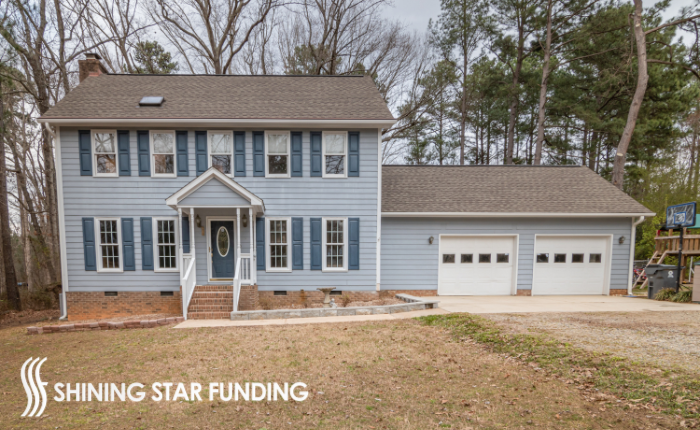
The core of the process relies on a very simple mathematical principle. To calculate the area of any rectangular room, you use the standard square feet formula: Length multiplied by Width equals Area. For example, if you have a bedroom that is 12 feet long and 10 feet wide, the calculation is $12 \times 10 = 120$. Therefore, the room is 120 square feet.
However, houses are rarely a series of perfect rectangles. Many modern homes feature alcoves, bay windows, or L-shaped hallways. To handle these, the best strategy is to break the room down into smaller, manageable sections. If you have an L-shaped living room, imagine it as two separate rectangles. Calculate the area of each and then add them together. This “divide and conquer” method is the most reliable way for how to figure out square footage without getting overwhelmed by complex architecture.
Step 3: Understanding "Finished" vs. "Unfinished" Space
One of the biggest points of confusion when trying to determine square footage of home is deciding which areas to include. In the real estate world, “Gross Living Area” (GLA) generally only includes space that is finished, heated, and permit-ready. This distinction is crucial for first-time homebuyers who might see a large basement and assume it adds significantly to the official count. If the basement is unfinished, with exposed rafters and concrete floors, it typically does not count toward the official square footage used in appraisals.
Attics and garages follow similar rules. A garage is almost never included in the living area square footage, even if it is pristine. For retirees looking at older homes, keep an eye out for “enclosed porches.” If the porch has been converted into a sunroom but lacks a permanent heating source, it might not be included in the official tally. Knowing how to figure square footage based on these standards helps you compare properties more accurately on a price-per-square-foot basis.
Step 4: The Exterior vs. Interior Measurement Debate
There is often a discrepancy between what a homeowner measures and what an appraiser reports. This is usually because appraisers often measure the exterior of the home. By measuring from the outside, they include the thickness of the walls. While this might seem like a small difference, over the perimeter of a 2,000-square-foot house, those extra inches can add up to a significant amount. If you are learning how to calculate square footage for the purpose of buying new flooring, you should always measure the interior wall-to-wall. If you are doing it to estimate property value, try measuring the exterior to get closer to the professional appraisal number.
Step 5: Measuring Round or Irregularly Shaped Rooms
For the luxury real estate investor or the asset-rich buyer, high-end homes often feature curved walls or circular turrets. This is where the square feet formula gets a bit more technical. For a circular space, you will need to find the radius (the distance from the center to the edge), square it, and multiply by Pi ($\pi \approx 3.14$).
If you find yourself in a room with a triangular nook, the formula is $0.5 \times Base \times Height$. While these shapes are less common, they are often the “statement pieces” of a home that add character. Being able to accurately account for them ensures that no part of the property is left out of your valuation. This level of detail is what separates the casual buyer from the sophisticated participant in the homeownership category.
Common Room Dimension Reference Table
| Room Type | Typical Dimensions (ft) | Average Square Feet | Measurement Tip |
|---|---|---|---|
| Powder Room | 5 x 5 | 25 | Measure from the back of the toilet to the door. |
| Standard Bedroom | 11 x 12 | 132 | Don't forget to include the closet area! |
| Primary Bedroom | 14 x 16 | 224 | Break into sections if there is a sitting area. |
| Two-Car Garage | 20 x 20 | 400 | Usually excluded from "Livable" total. |
Step 6: Accounting for Stairs and Hallways
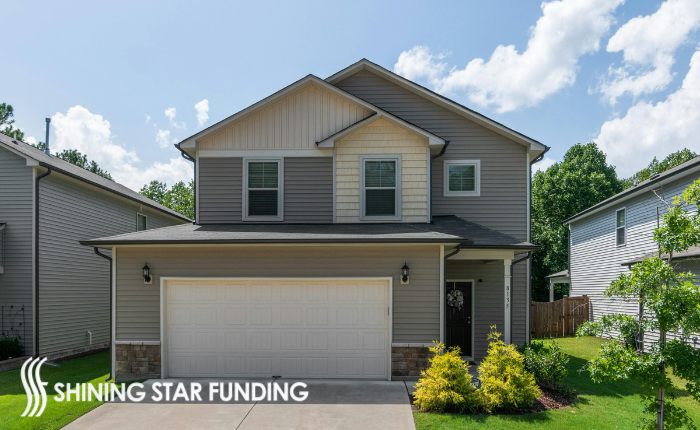
A common mistake when homeowners try to figure out how many square feet are in a multi-story house is forgetting how to treat the stairs. Generally, the area occupied by the stairs is included in the square footage of the floor from which they descend. If you have a two-story foyer where you can look down from the second floor to the first, that “open air” space is not counted on the second floor’s total. You only count the actual floor you can walk on.
Real estate investors often look at “efficient” floor plans where the hallway space is minimized. Large, sprawling hallways might increase the total square footage, but they don’t always add functional value. When you are looking at how to calculate square footage, pay attention to how much of that area is usable living space versus transitional space. This can be a major factor in determining the rental potential or “livability” of a property.
Step 7: Finalizing and Documenting Your Findings
Once you have measured every room and applied the square feet formula to all your sections, it is time for the final tally. Add all your subtotals together. It is a good practice to do this twice to ensure no mathematical errors were made. If you are a first-time homebuyer, compare your final number to the one provided in the listing. If there is a difference of more than 5%, it’s worth asking your real estate agent for clarification.
Documenting these measurements is a key part of responsible homeownership. Keep your sketches and calculations in a “home binder” along with your deed and insurance papers. Should you ever decide to renovate or if you need to challenge a property tax assessment, you will have the data ready to go. Having a precise understanding of your home’s dimensions allows you to speak with confidence when dealing with contractors or tax officials.
Why This Matters for Your Financial Future
In the end, knowing how to figure out square footage is about protecting your investment. For the self-employed homebuyer, it ensures your home office deductions are accurate. For the retiree, it helps in planning for furniture and accessibility. For the investor, it is the bedrock of the “price per square foot” metric that determines whether a deal is a “buy” or a “pass.”
The homeownership category is full of variables, from interest rates to market trends. However, the physical footprint of your property is one of the few constants. By taking the time to learn how to determine square footage of home, you are taking a proactive step in managing your most significant asset. Grab your tape measure, fire up your calculator, and get to know your home—down to the very last square inch.

Frequently Asked Questions
- Does a finished basement count toward square footage? In many markets, it is listed separately from the “Above-Grade” square footage, but it still adds significant value to the property.
- Should I include the thickness of the walls? If you want to match a professional appraiser’s method, yes, use exterior measurements. For interior projects, measure wall-to-wall.
- How do I measure a room with a sloped ceiling? Generally, you only count the portion of the room where the ceiling height is at least 5 feet, and at least half of the finished area must have a height of at least 7 feet.
- What is the quickest way to figure out square footage? Using a laser distance measurer is significantly faster and more accurate than a traditional tape measure for large homes.
FAQ's
Yes. As long as they are finished and heated, closets, hallways, and even the thickness of the interior walls are typically included in the total square footage calculation.
Tax assessors often use rough exterior estimates or historical data, while appraisers follow strict ANSI Z765 standards. It is common for these two numbers to vary slightly.
You must calculate each floor separately. Measure the exterior footprint of each level, and don’t forget that staircases usually count toward the square footage of the floor from which they descend.
While a traditional tape measure works, many homeowners now use laser distance measurers or smartphone apps that use augmented reality (AR) to map out rooms instantly.
For detached single-family homes, professionals measure the exterior dimensions of the house. For condos or townhomes with shared walls, interior measurements (paint-to-paint) are typically used.
According to ANSI standards, you only count the parts of the room where the ceiling is at least 5 feet high. Additionally, at least 50% of the room must have a ceiling height of at least 7 feet.
While these areas are important, they are generally not included in the “Gross Living Area” (GLA) on a real estate listing. They are usually listed separately as unfinished or non-living space.
The easiest way is to divide the room into two separate rectangles. Calculate the area of each rectangle individually and then add the two sums together to get the total.
To be included in the main square footage of a listing, a space must be finished (walls, floors, ceilings), have a minimum ceiling height (usually 7 feet), and be climate-controlled (heated/cooled).
The basic square feet formula is Length × Width = Area. For example, if a bedroom is 12 feet long and 10 feet wide, you would multiply $12 \times 10$ to get 120 square feet.

527 Sycamore Valley Rd W, Danville, CA 94526
Toll Free Call : (866) 280-0020
For informational purposes only. No guarantee of accuracy is expressed or implied. Programs shown may not include all options or pricing structures. Rates, terms, programs and underwriting policies subject to change without notice. This is not an offer to extend credit or a commitment to lend. All loans subject to underwriting approval. Some products may not be available in all states and restrictions may apply. Equal Housing Opportunity.
Interactive calculators are self-help tools. Results received from this calculator are designed for comparative and illustrative purposes only, and accuracy is not guaranteed. Shining Star Funding is not responsible for any errors, omissions, or misrepresentations. This calculator does not have the ability to pre-qualify you for any loan program or promotion. Qualification for loan programs may require additional information such as credit scores and cash reserves which is not gathered in this calculator. Information such as interest rates and pricing are subject to change at any time and without notice. Additional fees such as HOA dues are not included in calculations. All information such as interest rates, taxes, insurance, PMI payments, etc. are estimates and should be used for comparison only. Shining Star Funding does not guarantee any of the information obtained by this calculator.
Privacy Policy | Accessibility Statement | Term of Use | NMLS Consumer Access
CMG Mortgage, Inc. dba Shining Star Funding, NMLS ID# 1820 (www.nmlsconsumeraccess.org, www.cmghomeloans.com), Equal Housing Opportunity. Licensed by the Department of Financial Protection and Innovation (DFPI) under the California Residential Mortgage Lending Act No. 4150025. To verify our complete list of state licenses, please visit www.cmgfi.com/corporate/licensing