FHA borrowers with credit challenges often find the FHA loan program to be a practical option for achieving homeownership. Designed with flexible guidelines, FHA loans can accommodate lower credit scores and past financial setbacks when certain requirements are met. Understanding how FHA loans support borrowers with credit challenges helps applicants set realistic expectations and take confident steps toward qualifying for a mortgage.
The Federal Housing Administration (FHA) loan program is specifically designed to stabilize the housing market by ensuring mortgage financing is available to a broad demographic, including those who may not qualify for conventional financing due to credit challenges or minimal down payments. Unlike conventional loans, which often require higher credit scores, FHA-insured mortgages offer flexible guidelines that allow borrowers with past financial difficulties—such as bankruptcy, foreclosure, or collections—to achieve homeownership.
Articles that give you more information about this loan and explain how mortgages work.
The FHA uses a borrower’s Minimum Decision Credit Score (MDCS) to determine eligibility and down payment requirements.
FHA guidelines provide specific “seasoning periods” (waiting times) and requirements for borrowers who have experienced significant negative credit events.
When a borrower does not receive an automated approval (an “Accept” or “Approve” recommendation) from the TOTAL Mortgage Scorecard, or has specific risk factors like recent late mortgage payments or bankruptcy within two years, the loan must be manually underwritten.
Manual underwriting imposes stricter Debt-to-Income (DTI) ratio limits. The standard maximum ratios are 31% for housing costs and 43% for total debt. However, these ratios can be exceeded (up to 40%/50%) if the borrower has “compensating factors,” such as:
FHA guidelines regarding student loans have evolved to assist borrowers. Lenders must include student loans in the borrower’s liabilities regardless of payment status. If the payment reported on the credit report is greater than zero, that amount is used. If the reported payment is zero, the lender calculates the monthly obligation as 0.5% of the outstanding loan balance.
While the FHA loan program is accessible, it is not without standards. Borrowers with credit challenges must demonstrate a documented recovery from past financial difficulties and the ability to manage new debt obligations. By permitting manual underwriting and offering allowances for extenuating circumstances, the FHA provides a critical pathway to homeownership for underserved borrowers.
Manual underwriting is required when a borrower does not receive an automated approval or has specific risk factors, such as a bankruptcy discharge within two years or disputed accounts exceeding $1,000. In a manual underwrite, a human underwriter thoroughly reviews the file rather than relying on an automated score. This process imposes stricter debt-to-income ratio limits—typically 31 percent for housing and 43 percent for total debt. However, higher ratios may be approved if the borrower demonstrates “compensating factors,” such as significant cash reserves, minimal housing payment increase, or substantial residual income.
Having no credit score or an insufficient credit history does not prohibit a borrower from obtaining an FHA loan. In these situations, lenders can build a “non-traditional” credit report to assess the borrower’s willingness to repay debts. This involves verifying payment histories for expenses that don’t typically appear on standard credit reports, such as rent payments, utility bills, mobile phone service, and insurance premiums. To qualify, a borrower typically needs to provide evidence of on-time payments for at least three distinct credit references over the most recent 12-month period to establish a satisfactory payment history.
Borrowers with delinquent federal tax debt are generally ineligible for FHA financing. However, having a tax lien does not automatically result in a denial. A borrower may still qualify if they have entered into a valid repayment agreement with the federal agency owed to make regular payments on the debt. Crucially, the borrower must have made timely payments for at least three months prior to the loan application. Lenders will verify this payment history and include the monthly tax payment amount in the borrower’s debt-to-income ratio; prepaying three months at once is not permitted.
FHA guidelines require lenders to include student loan payments in the borrower’s debt-to-income (DTI) ratio, regardless of whether the loans are in deferment or forbearance. If the actual monthly payment reported on the credit report is greater than zero, the lender uses that amount. If the reported payment is zero, the lender must calculate the monthly obligation as 0.5 percent of the outstanding loan balance. This policy ensures borrowers can afford the mortgage alongside educational debt. If the calculated payment causes DTI issues, borrowers may provide documentation from their servicer showing a different amortization schedule.
Disputed derogatory credit accounts can complicate the underwriting process. If a borrower has $1,000 or more collectively in disputed derogatory accounts—such as disputed charge-offs, collections, or accounts with recent late payments—the loan application cannot be approved through an automated system. Instead, it must be downgraded to a “Refer” status, requiring a human underwriter to manually review the file. Certain accounts are excluded from this total, including disputed medical accounts and disputes resulting from identity theft, provided the borrower submits a police report or creditor documentation supporting the claim to the lender.
Outstanding collection accounts do not necessarily disqualify a borrower. If the cumulative balance of collection accounts is $2,000 or greater, the lender must verify that the debt is paid in full or that the borrower has a payment arrangement. If no arrangement exists, the lender will calculate a monthly payment equal to 5 percent of the outstanding balance to include in the debt-to-income ratio. Court-ordered judgments generally must be paid off before closing; however, a borrower may qualify if they have an executed repayment agreement and have made at least three months of scheduled payments on time.
A past foreclosure generally results in a three-year waiting period before a borrower becomes eligible for a new FHA loan. This three-year clock starts on the date the property title was transferred from the borrower, such as the date of the deed-in-lieu or the foreclosure sale. However, exceptions to this waiting period may be granted if the foreclosure was the result of documented extenuating circumstances beyond the borrower’s control, such as the serious illness or death of a wage earner. Divorce or the inability to sell a home due to a job transfer are typically not considered valid extenuating circumstances.
Unlike Chapter 7, borrowers currently in Chapter 13 bankruptcy may still qualify for an FHA loan before their debts are fully discharged. To be eligible, at least 12 months of the bankruptcy payout period must have elapsed. Furthermore, the lender must verify that the borrower’s payment performance has been satisfactory during that time, meaning all required payments were made on time. Crucially, the borrower must also receive written permission from the bankruptcy court to enter into the new mortgage transaction. If these conditions are met, the borrower does not have to wait for discharge.
Filing for Chapter 7 bankruptcy does not permanently bar you from obtaining an FHA loan. Generally, a borrower is eligible for an FHA-insured mortgage if at least two years have elapsed since the date of the bankruptcy discharge, not the filing date. During this seasoning period, you must have either re-established good credit or chosen not to incur new credit obligations. Exceptions allowing for a waiting period of less than two years (but not less than 12 months) may be granted if the bankruptcy was caused by documented extenuating circumstances beyond your control.
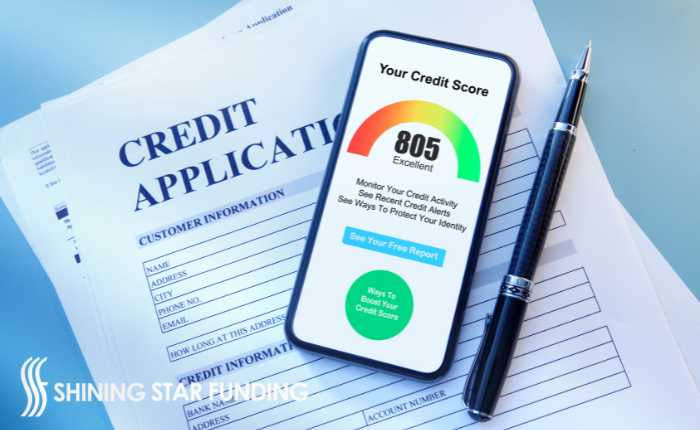
To qualify for the FHA’s maximum financing, which requires a down payment of just 3.5 percent, borrowers generally need a Minimum Decision Credit Score (MDCS) of 580 or higher. However, applicants with scores between 500 and 579 are not automatically disqualified; they may still be eligible for an FHA-insured loan but must provide a larger down payment of at least 10 percent. Borrowers with credit scores below 500 are generally ineligible for FHA financing. While the FHA sets these minimums, individual lenders may have stricter overlays requiring higher scores for approval.
527 Sycamore Valley Rd W, Danville, CA 94526
Toll Free Call : (866) 280-0020
For informational purposes only. No guarantee of accuracy is expressed or implied. Programs shown may not include all options or pricing structures. Rates, terms, programs and underwriting policies subject to change without notice. This is not an offer to extend credit or a commitment to lend. All loans subject to underwriting approval. Some products may not be available in all states and restrictions may apply. Equal Housing Opportunity.
Interactive calculators are self-help tools. Results received from this calculator are designed for comparative and illustrative purposes only, and accuracy is not guaranteed. Shining Star Funding is not responsible for any errors, omissions, or misrepresentations. This calculator does not have the ability to pre-qualify you for any loan program or promotion. Qualification for loan programs may require additional information such as credit scores and cash reserves which is not gathered in this calculator. Information such as interest rates and pricing are subject to change at any time and without notice. Additional fees such as HOA dues are not included in calculations. All information such as interest rates, taxes, insurance, PMI payments, etc. are estimates and should be used for comparison only. Shining Star Funding does not guarantee any of the information obtained by this calculator.
Privacy Policy | Accessibility Statement | Term of Use | NMLS Consumer Access
CMG Mortgage, Inc. dba Shining Star Funding, NMLS ID# 1820 (www.nmlsconsumeraccess.org, www.cmghomeloans.com), Equal Housing Opportunity. Licensed by the Department of Financial Protection and Innovation (DFPI) under the California Residential Mortgage Lending Act No. 4150025. To verify our complete list of state licenses, please visit www.cmgfi.com/corporate/licensing