
High Credit Score Impact

High Credit Score Impact: How It Benefits Your Mortgage Approval
A strong credit profile can make a significant difference when applying for a mortgage. Understanding the high credit score impact helps borrowers see how better credit can lead to lower interest rates, higher loan approval chances, and more favorable loan terms, ultimately saving money over the life of the loan.
In the mortgage lending landscape, a borrower’s credit score serves as a primary indicator of their willingness and ability to repay debt, directly influencing the cost and availability of financing. While a minimum score of 620 is generally required for standard conventional loans, possessing a “high” credit score—often cited as 720 or 740 and above—unlocks substantial financial benefits, including lower interest rates, reduced insurance costs, and access to exclusive loan products.
Interest Rates and Price Adjustments
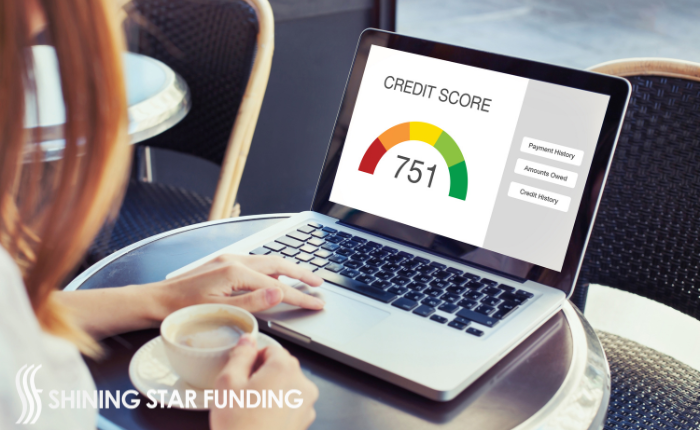
The most immediate financial impact of a high credit score is the interest rate offered. Conventional loan rates are heavily based on the applicant’s credit score. For instance, a homebuyer with a credit score of 740 and a 20% down payment will typically be offered an interest rate approximately 0.50% lower than a buyer with a 640 score.
This pricing disparity is largely driven by Loan-Level Price Adjustments (LLPAs). Fannie Mae and Freddie Mac assess these risk-based fees at the time of delivery based on the loan’s risk profile. These fees are cumulative and are often passed to the borrower in the form of a higher interest rate. Borrowers with high credit scores generally face fewer or lower LLPAs compared to those with lower scores, effectively reducing the cost of borrowing.

Private Mortgage Insurance (PMI)
For borrowers putting down less than 20%, a high credit score significantly reduces the cost of Private Mortgage Insurance (PMI). Unlike Federal Housing Administration (FHA) loans, where mortgage insurance premiums are generally static regardless of credit depth, conventional PMI rates vary widely based on credit history. Borrowers with credit scores above 720 typically find that conventional PMI costs less than FHA mortgage insurance, whereas those with lower scores might pay more for conventional coverage. This difference makes high credit scores a critical factor in minimizing monthly housing expenses for low-down-payment borrowers.
Loan Eligibility and Underwriting Flexibility
A high credit score expands a borrower’s access to loan products and provides flexibility during the underwriting process:
- Jumbo Loans: High-priced properties requiring “jumbo” financing (loans exceeding conforming limits) generally require stricter credit standards. Lenders typically require a credit score of 700 or higher to approve a jumbo mortgage.
- Multiple Financed Properties: Investors seeking to finance multiple properties face tighter restrictions. For example, to finance between seven and ten properties, a borrower is required to have a minimum credit score of 720.
- Risk Offsets: In automated underwriting systems like Desktop Underwriter (DU), a high credit score acts as a low-risk factor that can offset high-risk factors, such as a high Loan-to-Value (LTV) ratio.
- Manual Underwriting: For manually underwritten loans, a higher credit score allows for higher Debt-to-Income (DTI) ratios. While the standard maximum DTI is 36%, borrowers with higher credit scores and sufficient reserves may qualify with ratios up to 45%.
While a minimum score allows entry into the housing market, a high credit score acts as a powerful financial lever. It lowers the effective Annual Percentage Rate (APR) by reducing interest rates and insurance premiums, grants access to luxury and investment financing, and provides a buffer against other risk factors during the underwriting process.
FAQ's
A high credit score generally results in lower costs for a borrower. Fannie Mae and Freddie Mac assess Loan-Level Price Adjustments (LLPAs) or Credit Fees based on risk factors, primarily the representative credit score and the Loan-to-Value (LTV) ratio. Borrowers with higher credit scores typically qualify for lower LLPAs, which translates to a lower interest rate or fewer discount points charged at closing. Conversely, lower scores often trigger higher fees to mitigate the increased risk of default assumed by the lender and the investor.
Yes, a high credit score can provide flexibility with DTI limits. For loans underwritten through Fannie Mae’s Desktop Underwriter (DU), a borrower may qualify with a DTI ratio up to 50% if the overall risk assessment, heavily influenced by credit score, is strong. In manual underwriting scenarios, the standard maximum DTI is 36%, but this can be extended to 45% if the borrower meets specific credit score and reserve requirements found in the eligibility matrices. Higher scores demonstrate a stronger capacity to repay, allowing lenders to accept higher monthly debt loads.
While the baseline minimum credit score for a fixed-rate conventional loan is typically 620, having a higher score opens up more options. For instance, manually underwritten adjustable-rate mortgages (ARMs) often require a minimum score of 640. Furthermore, specialized programs or scenarios, such as financing multiple investment properties or obtaining a high-balance loan, may impose higher minimum score requirements, such as 700 or 720. A high score ensures eligibility across a broader range of loan products and underwriting paths.
A high credit score can reduce or eliminate the need for documented liquid financial reserves. Automated underwriting systems like Desktop Underwriter (DU) determine reserve requirements based on the overall risk assessment of the loan casefile. High credit scores contribute to a favorable risk profile, which may lead the system to require fewer months of reserves, or even zero reserves for certain transaction types, such as single-unit principal residence purchases. In contrast, lower scores or higher-risk profiles often trigger requirements for six months or more of verified reserves.
Yes, a high credit score is often critical for investment property eligibility, especially for borrowers with multiple financed properties. For example, if a borrower already owns multiple financed properties (typically between 7 and 10), Fannie Mae and Freddie Mac require a minimum credit score of 720 to purchase additional investment properties or second homes. A high score is used to offset the additional risk associated with managing multiple mortgage obligations and rental properties,,. 6. How does a high credit score impact the cost of private mortgage insurance (PMI)? Borrowers with high credit scores generally pay lower premiums for private mortgage insurance. While standard coverage levels are determined by the Loan-to-Value (LTV) ratio, lenders can select “minimum” coverage options that require Loan-Level Price Adjustments (LLPAs). These LLPAs are directly tied to the borrower’s credit score; higher scores result in lower adjustments. Additionally, mortgage insurers themselves price their policies based on credit risk, so a high score helps secure the most favorable insurance rates available.
Yes, but the standards are stricter. If a borrower does not receive an “Approve” or “Accept” recommendation from an automated system, the lender may manually underwrite the loan. However, manual underwriting has higher minimum credit score requirements than automated underwriting. For example, a fixed-rate manual loan requires a minimum score of 620, while an adjustable-rate mortgage (ARM) requires at least 640. A high credit score is essential to meet these eligibility floors when automated approval is not achieved.
High-balance (or super conforming) loans, which exceed standard conforming limits in high-cost areas, carry greater risk and therefore often have stricter credit score requirements. For instance, while standard loans might be eligible with a 620 score, high-balance loans may require higher scores depending on the LTV ratio and whether the loan is manually underwritten or processed through an automated system. A high credit score helps ensure eligibility for these larger loan amounts and may mitigate the additional price adjustments associated with them.
Credit history is a primary risk factor evaluated by systems like Desktop Underwriter (DU) and Loan Product Advisor (LPA). These systems analyze the credit report data to assess the borrower’s willingness to repay. A high credit score significantly improves the chances of receiving an “Approve” or “Accept” recommendation. This recommendation is crucial because it offers the lender relief from certain representations and warranties and often allows for more flexible documentation and qualifying ratios compared to manual underwriting.
Lenders typically pull credit scores from the three major repositories (Equifax, Experian, TransUnion) for all borrowers. For a single borrower, the representative score is the middle of the three scores. If there are multiple borrowers, the lender determines the representative score for each individual and then selects the lowest of those scores to represent the entire loan. Therefore, even if one borrower has a very high score, a co-borrower with a lower score can dictate the loan’s pricing and eligibility, making it important for all applicants to maintain high scores.
Borrowers with high credit scores generally pay lower premiums for private mortgage insurance. While standard coverage levels are determined by the Loan-to-Value (LTV) ratio, lenders can select “minimum” coverage options that require Loan-Level Price Adjustments (LLPAs). These LLPAs are directly tied to the borrower’s credit score; higher scores result in lower adjustments. Additionally, mortgage insurers themselves price their policies based on credit risk, so a high score helps secure the most favorable insurance rates available

527 Sycamore Valley Rd W, Danville, CA 94526
Toll Free Call : (866) 280-0020
For informational purposes only. No guarantee of accuracy is expressed or implied. Programs shown may not include all options or pricing structures. Rates, terms, programs and underwriting policies subject to change without notice. This is not an offer to extend credit or a commitment to lend. All loans subject to underwriting approval. Some products may not be available in all states and restrictions may apply. Equal Housing Opportunity.
Interactive calculators are self-help tools. Results received from this calculator are designed for comparative and illustrative purposes only, and accuracy is not guaranteed. Shining Star Funding is not responsible for any errors, omissions, or misrepresentations. This calculator does not have the ability to pre-qualify you for any loan program or promotion. Qualification for loan programs may require additional information such as credit scores and cash reserves which is not gathered in this calculator. Information such as interest rates and pricing are subject to change at any time and without notice. Additional fees such as HOA dues are not included in calculations. All information such as interest rates, taxes, insurance, PMI payments, etc. are estimates and should be used for comparison only. Shining Star Funding does not guarantee any of the information obtained by this calculator.
Privacy Policy | Accessibility Statement | Term of Use | NMLS Consumer Access
CMG Mortgage, Inc. dba Shining Star Funding, NMLS ID# 1820 (www.nmlsconsumeraccess.org, www.cmghomeloans.com), Equal Housing Opportunity. Licensed by the Department of Financial Protection and Innovation (DFPI) under the California Residential Mortgage Lending Act No. 4150025. To verify our complete list of state licenses, please visit www.cmgfi.com/corporate/licensing