
Does Low Down Payment Affect Interest Rate
Does Low Down Payment Affect Interest Rate? What Homebuyers Should Know
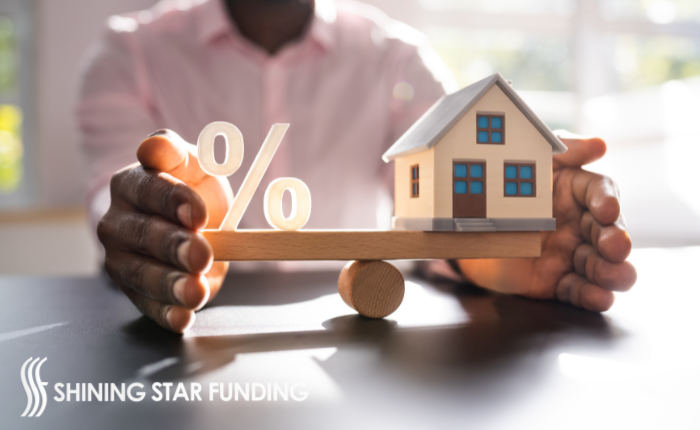
Many prospective homeowners ask, does low down payment affect interest rate when securing a mortgage. While putting less money down can make buying a home more accessible upfront, it may also impact your interest rate, loan costs, and overall mortgage payments. Understanding how down payment size influences these factors is key to making informed homebuying decisions.
While the ability to purchase a home with a down payment as low as 3% has expanded access to homeownership, borrowers must understand the financial trade-offs involved. The size of a down payment is a primary risk indicator for lenders. Generally, a lower down payment results in a higher loan-to-value (LTV) ratio, which increases the lender’s risk exposure. To compensate for this elevated risk, lenders typically charge higher interest rates or additional fees compared to loans with substantial equity, such as 20% down.
Loan-Level Price Adjustments (LLPAs)
The primary mechanism through which a low down payment affects the interest rate on a conventional loan is the Loan-Level Price Adjustment (LLPA). Fannie Mae and Freddie Mac assess these risk-based fees at the time of delivery based on the borrower’s credit score and the LTV ratio.
• The Cost of Risk: A minimum down payment results in a high LTV ratio (e.g., 97%). This high LTV often triggers higher LLPA fees. Lenders typically pass these costs on to the borrower in the form of a higher interest rate or higher closing costs,.
• Recent Changes: Upfront fees on Fannie Mae and Freddie Mac loans were adjusted in May 2023. Under these guidelines, the down payment size directly influences the fee; generally, a higher down payment results in lower fees, though the final cost still depends heavily on the borrower’s credit score.
The Intersection of Credit Score and Down Payment
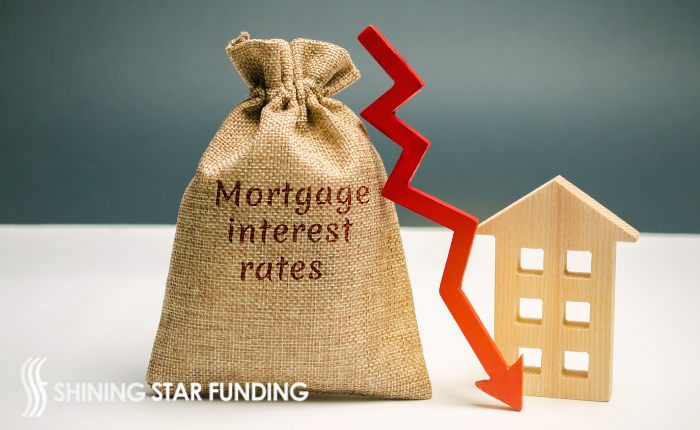
The impact of a low down payment on the interest rate is closely tied to the borrower’s credit history. Conventional loan rates are heavily based on credit scores—more so than government-backed loans like FHA.
• High Credit Scores: Borrowers with excellent credit (e.g., 720 or higher) may still qualify for competitive rates despite a low down payment. A borrower with a 740 score and a 20% down payment will typically be offered a significantly lower rate—potentially around 0.50% lower—than a borrower with a 640 score.
• Low Credit Scores: Borrowers with lower credit scores who also make minimum down payments present a “layered risk” to lenders. To offset this, lenders may charge a higher interest rate. Consequently, a borrower putting down 3% with a 620 credit score will likely face a higher interest rate than a borrower with the same credit score putting down 10% or 20%.
Mortgage Insurance and Effective Costs
It is important to note that while the base interest rate might be slightly higher due to a low down payment, the presence of Private Mortgage Insurance (PMI) also plays a role. PMI is mandatory for conventional loans with less than 20% down,. Because PMI protects the lender against default, it enables them to offer rates that are lower than they would be for an uninsured loan of equal risk. However, when calculating the Annual Percentage Rate (APR)—which reflects the total cost of borrowing—the inclusion of PMI premiums makes the effective interest rate on a low-down-payment loan higher than one with 20% down.
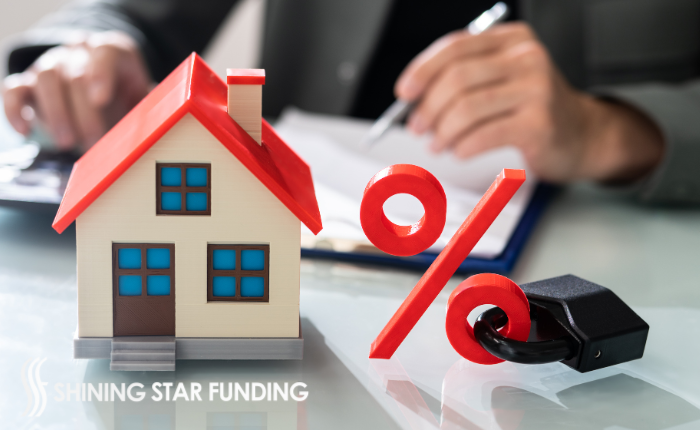
Putting down the minimum requirement often correlates with a higher interest rate. Rates for 3% down payment programs are generally based on standard rates plus a slight rate increase. While low down payment options preserve liquid cash for the borrower, they necessitate a higher monthly cost through the combination of higher interest rates derived from LLPAs and the ongoing cost of mortgage insurance. Borrowers must weigh the benefit of immediate homeownership against the long-term cost of a higher interest rate.
FAQ's
If you must make a low down payment, the best way to secure a favorable interest rate is to maximize your credit score. Lenders offer the best terms to borrowers with scores of 740 or higher, even with 3-5% down. Additionally, you should shop around with multiple lenders, as they have different risk appetites and pricing models. You should also check eligibility for programs like HomeReady or Home Possible, which offer reduced pricing adjustments. Finally, consider using gift funds to increase your down payment slightly, as moving from 3% to 5% or 10% can sometimes lower your rate tier.
Generally, yes, a lower down payment often results in a higher interest rate, but it is not the only factor. Lenders assess mortgage applications based on risk. A loan with a high Loan-to-Value (LTV) ratio, such as 97% (3% down), is considered riskier than a loan with an 80% LTV (20% down). To compensate for this increased risk, lenders often apply Loan-Level Price Adjustments (LLPAs). These adjustments increase the cost of the loan, which lenders typically pass on to borrowers in the form of a higher interest rate or higher closing costs
Loan-Level Price Adjustments (LLPAs) are risk-based fees assessed by government-sponsored enterprises like Fannie Mae and Freddie Mac. These fees vary based on your credit score and the size of your down payment (LTV ratio). If you make a minimum down payment, such as 3% or 5%, your LTV is high, which typically triggers higher LLPAs compared to a borrower putting down 20%. Lenders generally cover these fees by increasing your mortgage interest rate rather than asking for the cash upfront. Therefore, a smaller down payment directly correlates to these pricing adjustments, resulting in a higher effective interest rate.
Your credit score and down payment amount work together to determine your interest rate. Conventional loan rates are highly sensitive to credit scores. If you have a low down payment (e.g., 3%) and a lower credit score (e.g., 620-640), you are viewed as a “layered risk.” This combination usually results in the highest LLPAs and, consequently, significantly higher interest rates. Conversely, a borrower with a high credit score (e.g., 740+) who puts down the minimum may still secure a competitive rate because their strong credit history helps offset the risk associated with the low down payment.
When you put down less than 20% on a conventional loan, you must pay for Private Mortgage Insurance (PMI). While PMI is an added monthly cost, it protects the lender against default. Because this insurance reduces the lender’s risk exposure, they may be able to offer a base interest rate that is lower than it would be for an uninsured loan of similar risk. However, when you look at the Annual Percentage Rate (APR), which includes fees and insurance costs, the effective cost of borrowing is higher for low down payment loans due to the added PMI premiums.
Yes, there are affordable lending programs designed to help low-to-moderate-income borrowers that mitigate rate increases. Programs like Fannie Mae’s HomeReady® and Freddie Mac’s Home Possible® allow for down payments as low as 3%. These programs often cap or waive certain Loan-Level Price Adjustments (LLPAs) that would normally apply to loans with high LTV ratios. This means that qualifying borrowers can make a minimum down payment without facing the same steep interest rate penalties that standard conventional borrowers might face, provided they meet income eligibility limits and other program requirements.
FHA loans often have lower quoted interest rates than conventional loans for borrowers with low down payments (3.5%) and lower credit scores. This is because the government backing mitigates the lender’s risk. Unlike conventional loans, where the rate spikes significantly as credit scores drop, FHA rates remain relatively stable even for borrowers with scores between 580 and 620. However, FHA loans require an upfront mortgage insurance premium and monthly premiums that may last for the life of the loan. Therefore, while the interest rate appears lower, the overall APR and long-term cost might be higher than a conventional loan.
Yes, regardless of your down payment size, you can usually pay “discount points” to lower your interest rate. One point is equal to 1% of your loan amount. By paying this fee upfront at closing, you are essentially prepaying interest to secure a lower rate for the life of the loan. This strategy, known as a permanent buydown, can be particularly useful if a low down payment has triggered a higher interest rate due to LLPAs. However, you must have the extra cash available at closing to pay for these points on top of your down payment.
The Annual Percentage Rate (APR) is a broader measure of borrowing costs than the simple interest rate because it includes points, broker fees, and other charges. Crucially, when you make a low down payment, the cost of mortgage insurance (PMI or MIP) is often factored into the APR calculation or affects the total cost of the loan. While a lender might quote a competitive interest rate for a 3% down loan, the APR will be higher to reflect the mandatory insurance premiums and any risk-based fees (LLPAs) rolled into the loan costs. Comparing APRs helps you see the true cost of a low down payment.
Yes, the property type influences the rate and down payment relationship. Low down payment options (3-5%) are generally restricted to one-unit principal residences. If you are buying a 2-4 unit property, the minimum down payment is higher (often 15-25%), and the interest rates are generally higher due to increased risk. Furthermore, purchasing a condo with a low down payment can trigger specific pricing adjustments. If you put down less than 25% on a condo, you may face additional fees or higher rates compared to a single-family home with the same down payment, due to the perceived higher risk of condo projects.

527 Sycamore Valley Rd W, Danville, CA 94526
Toll Free Call : (866) 280-0020
For informational purposes only. No guarantee of accuracy is expressed or implied. Programs shown may not include all options or pricing structures. Rates, terms, programs and underwriting policies subject to change without notice. This is not an offer to extend credit or a commitment to lend. All loans subject to underwriting approval. Some products may not be available in all states and restrictions may apply. Equal Housing Opportunity.
Interactive calculators are self-help tools. Results received from this calculator are designed for comparative and illustrative purposes only, and accuracy is not guaranteed. Shining Star Funding is not responsible for any errors, omissions, or misrepresentations. This calculator does not have the ability to pre-qualify you for any loan program or promotion. Qualification for loan programs may require additional information such as credit scores and cash reserves which is not gathered in this calculator. Information such as interest rates and pricing are subject to change at any time and without notice. Additional fees such as HOA dues are not included in calculations. All information such as interest rates, taxes, insurance, PMI payments, etc. are estimates and should be used for comparison only. Shining Star Funding does not guarantee any of the information obtained by this calculator.
Privacy Policy | Accessibility Statement | Term of Use | NMLS Consumer Access
CMG Mortgage, Inc. dba Shining Star Funding, NMLS ID# 1820 (www.nmlsconsumeraccess.org, www.cmghomeloans.com), Equal Housing Opportunity. Licensed by the Department of Financial Protection and Innovation (DFPI) under the California Residential Mortgage Lending Act No. 4150025. To verify our complete list of state licenses, please visit www.cmgfi.com/corporate/licensing