
Buying a House 750 Credit Score
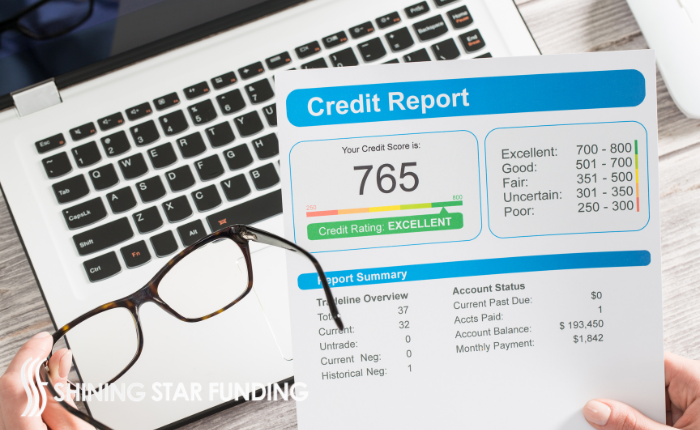
The Power of 750: How a High Credit Score Unlocks Your Future Home
Entering the real estate market in 2026 requires more than just a vision of the perfect kitchen or a quiet neighborhood; it requires a financial profile that commands respect from lenders. As you begin the essential steps of preparing to buy, your credit history takes center stage. Among the various numbers that define your financial health, the 750 credit score stands out as a significant milestone. It is a threshold that moves you from the realm of average borrowers into the category of elite candidates, offering you leverage that can save you tens of thousands of dollars over the life of a loan.
Whether you are a first-time homebuyer eager to stop paying rent, a self employed home buyer looking to prove stability despite fluctuating income, or a real estate investor aiming to maximize cash flow, your score is the key. Even for retirees and asset-rich individuals, a high score ensures that capital remains cheap, allowing for more strategic investment elsewhere. Understanding the nuances of a credit score 750 and how it influences the lending landscape is vital for anyone serious about property acquisition. In this analytical look at credit health, we explore why this specific number is the ultimate “green light” in the housing market.
What credit score do I need to buy a house?
The technical answer to this question depends largely on the type of loan you are seeking. In the current 2026 economic environment, you can actually buy a home with a score as low as 580 for certain government-backed programs. However, just because you can buy a house with a lower score doesn’t mean you should. There is a massive difference between “qualifying” and “thriving.” Lenders use your score to predict risk, and the lower the score, the higher the interest rate they will charge to offset that risk.
When people ask is 750 a good credit score, the answer is a resounding yes. While the highest possible score is 850, most lenders categorize anything above 740 as “Excellent” or “Very Good.” At this level, you are no longer just trying to get someone to say “yes” to your application; you are in a position to shop around and make lenders compete for your business. For those preparing to buy, reaching this tier is the single most effective way to lower your monthly housing costs before you even choose a property.
What types of loans can I get with a 750 credit score?
With a credit score 750, the entire menu of mortgage products is available to you. You are not restricted to specialized programs meant for credit-challenged individuals. Instead, you have the luxury of choosing the loan that best fits your long-term financial strategy.
- Conventional Loans: These are the gold standard for many buyers. With a high score, you will qualify for the lowest possible interest rates and, if you put down 20%, you can avoid private mortgage insurance (PMI) entirely.
- Jumbo Loans: For asset-rich individuals or those buying in high-cost luxury markets, jumbo loans are necessary because they exceed standard lending limits. These loans require high scores, and a 750 credit score often meets or exceeds the minimum requirement for these large-scale debts.
- FHA, VA, and USDA Loans: While these government-backed options are designed to help people with lower scores or smaller down payments, having a high score still benefits you here. You will likely fly through the underwriting process with minimal questions, as your score serves as a testament to your reliability.
- Investment Property Loans: Real estate investors know that lenders are much stricter on non-owner-occupied properties. A 750 credit score is often the baseline for securing a mortgage on a rental property at a rate that allows for positive monthly cash flow.
How does a 750 credit score impact how much house I can afford?
| Credit Score Range | Typical Interest Rate Category | Impact on Affordability |
|---|---|---|
| 800 – 850 | Prime+ (Lowest Possible) | Maximum purchasing power. |
| 740 – 799 | Prime | Excellent rates; high affordability. |
| 670 – 739 | Standard | Average rates; moderate affordability. |
| 580 – 669 | Subprime/Non-Conforming | Higher rates; reduced purchasing power. |
How can I improve my credit score?
If you are currently sitting just below the 750 mark, small adjustments can yield big results. As you are preparing to buy, take these analytical steps to polish your profile. Remember, credit scores are a snapshot of your behavior over time, and lenders in 2026 are looking for consistency and low utilization.
- Check for Errors: Obtain your reports from all three major bureaus and scan them for inaccuracies. Disputing a single incorrectly reported late payment can boost your score significantly in a short time.
- Lower Your Utilization: This is the fastest way to move the needle. Your credit utilization—the amount of credit you are using versus your total limit—should ideally be under 10% for a top-tier score. Paying down credit card balances can provide an immediate lift.
- Don’t Close Old Accounts: The length of your credit history matters. Even if you don’t use an old card, keeping it open helps your average account age, which is a key component of a high score.
- Avoid New Debt: During the months leading up to your home purchase, do not open new credit cards or take out auto loans. These “hard inquiries” can cause a temporary dip in your score and change your debt-to-income ratio.
The Psychological Advantage of a High Score
Beyond the numbers, a credit score 750 provides peace of mind. The homebuying process is naturally stressful, but knowing your financing is rock-solid allows you to focus on other details, like the home inspection or your moving logistics. For real estate investors, a high score is a badge of professionalism. It tells the bank that you are a steward of capital who understands the rules of the financial game. This trust can lead to smoother closings and even the potential for higher loan-to-value ratios on future deals.
Conclusion: Investing in Your Future
In the end, is 750 a good credit score for buying a house? It is more than just good—it is a strategic asset. Reaching this level is a clear signal that you are ready for the responsibilities of homeownership. It opens doors to the best loan products, the lowest interest rates, and the most flexible terms available in the market. By taking the time to understand and improve your score, you aren’t just getting a loan; you are making a high-yield investment in your own financial future.
As you continue preparing to buy, keep your eyes on the goal. Maintain your healthy financial habits, keep your debts low, and monitor your progress. The difference between an average score and a 750 credit score is the difference between simply owning a house and owning your financial destiny. With a clear plan and a disciplined approach, the keys to your dream home—and the wealth-building potential that comes with it—are well within your reach.
FAQ's
Not quite. Credit is only one “leg” of the mortgage stool. Lenders will also look at your income stability, your debt-to-income ratio, and your available assets. However, having that 750 score is the strongest possible start to your journey, ensuring that your credit history will never be the reason for a denial.
Lenders use specialized “Mortgage FICO” versions (like FICO 2, 4, or 5) which are different from the “FICO 8” or “VantageScore” you might see on a free app. These models are more sensitive to late payments and recent inquiries, which is why your “mortgage score” might be slightly lower than your “consumer score.”
If you are at 730 and want to hit that 750 cushion, focus on these three levers:
Utilization: Pay down credit card balances to below 10% of their limits.
The “Rapid Rescore”: If you pay off a debt, your lender can request a rapid rescore to update your points in days rather than weeks.
Dispute Errors: Even a minor error on your report can suppress your score; clearing it can provide an instant boost.
This is a critical concern when preparing to buy. Mortgage lenders typically do a final credit refresh right before closing. If a 750 drops to a 735, it might move you into a lower “pricing tier,” which could slightly increase your interest rate or fees. It is essential to avoid opening new credit lines or making large purchases until the keys are in your hand.
While DTI is a separate calculation, a 750 score can give lenders more “flexibility” with your file. If your DTI is slightly higher than the preferred 36% or 43%, a very high credit score can act as a “compensating factor,” allowing an underwriter to approve a loan they might otherwise reject for a lower-credit borrower.
A high credit score doesn’t eliminate the need for PMI if you put down less than 20%, but it does make it significantly cheaper. PMI companies base their rates on credit risk. A borrower with a 750 score might pay half as much in monthly PMI premiums as someone with a 680 score, effectively lowering the “hidden” costs of homeownership.
While 850 is the theoretical maximum, many lenders treat any score above 740 or 760 as “top tier.” This means that once you hit 750, you are likely receiving the same “best” interest rate as someone with an 800. You have reached the point of diminishing returns for rate discounts, giving you peace of mind that you are getting the best deal possible.
Credit scores and affordability are directly linked through the interest rate. A 750 score can easily save you 0.5% to 1.0% on your APR compared to someone with a 640 score. On a $400,000 mortgage, a 1% lower interest rate can save you approximately $250 per month. This increased “buying power” allows you to either qualify for a more expensive home or keep your monthly budget significantly lower, which is a vital part of preparing to buy.
A 750 score opens the door to virtually every mortgage product on the market:
Conventional Loans: You will qualify for the lowest interest rates and potentially lower Private Mortgage Insurance (PMI) premiums.
Jumbo Loans: For high-value properties that exceed conforming limits, a 750 is often the standard requirement for approval.
VA and USDA Loans: If you qualify for these government-backed programs, your 750 score ensures you get their absolute best internal rates.
Specialized Investor Loans: If you are seeking to build a portfolio, a 750 score makes it easier to secure financing for non-owner-occupied properties.
The “minimum” score varies by loan type, but a 750 puts you far above almost every baseline. While you can technically qualify for an FHA loan with a score as low as 500 (with 10% down), most conventional lenders prefer a minimum of 620. By reaching 750, you have surpassed the “Good” range and entered the top tier where lenders compete for your business, making the phase of preparing to buy much smoother.

527 Sycamore Valley Rd W, Danville, CA 94526
Toll Free Call : (866) 280-0020
For informational purposes only. No guarantee of accuracy is expressed or implied. Programs shown may not include all options or pricing structures. Rates, terms, programs and underwriting policies subject to change without notice. This is not an offer to extend credit or a commitment to lend. All loans subject to underwriting approval. Some products may not be available in all states and restrictions may apply. Equal Housing Opportunity.
Interactive calculators are self-help tools. Results received from this calculator are designed for comparative and illustrative purposes only, and accuracy is not guaranteed. Shining Star Funding is not responsible for any errors, omissions, or misrepresentations. This calculator does not have the ability to pre-qualify you for any loan program or promotion. Qualification for loan programs may require additional information such as credit scores and cash reserves which is not gathered in this calculator. Information such as interest rates and pricing are subject to change at any time and without notice. Additional fees such as HOA dues are not included in calculations. All information such as interest rates, taxes, insurance, PMI payments, etc. are estimates and should be used for comparison only. Shining Star Funding does not guarantee any of the information obtained by this calculator.
Privacy Policy | Accessibility Statement | Term of Use | NMLS Consumer Access
CMG Mortgage, Inc. dba Shining Star Funding, NMLS ID# 1820 (www.nmlsconsumeraccess.org, www.cmghomeloans.com), Equal Housing Opportunity. Licensed by the Department of Financial Protection and Innovation (DFPI) under the California Residential Mortgage Lending Act No. 4150025. To verify our complete list of state licenses, please visit www.cmgfi.com/corporate/licensing