Bank Statement Loan

Bank Statement Loans

What is a Bank Statement Loan?

A Bank Statement Loan is a type of Non-Qualified Mortgage (Non-QM) program.

It is specifically designed for borrowers—typically those who are self-employed—who find it difficult to qualify for a traditional mortgage using standard documentation. Instead of relying on traditional documents like W-2s, pay stubs, and tax returns, this loan product allows borrowers to verify their income by submitting deposits shown on their personal or business bank statements. The Non-QM status of the loan grants the us the flexibility to utilize these alternative documents to accurately determine the borrower’s capacity to repay the loan.

Get More In-Dept Details About Bank Statement Loans

Articles that give you more information about this loan and explain how mortgages work.

bank statement loan credit score requirements
Bank Statement Loan Down Payment Requirements
Bank Statement Loans after Bankruptcy
Bank Statement Loans after foreclosure
bank statement loans by Shining Star Funding
Bank statement Loans Debt To Income Requirements
bank statement loans for doctors
Bank Statement Loans for Low Taxable Income
Bank Statement Loans for Professionals
Bank Statement Loans for Real Estate Investors
Bank Statement Loans for Retired
Bank Statement Loans for Self Employed
bank statement loans reserve requirements
Income Criteria for Bank Statement Loans

Who is Generally Eligible to Borrow Under Bank Statement Loan Guidelines?

This program is primarily intended for borrowers whose tax returns might not accurately reflect their actual cash flow and true ability to service debt, often because they write off significant business expenses.

Eligible groups generally include:

  • Self-Employed Borrowers who run an active U.S.-based business that generates stable revenue.
  • Entrepreneurs and Contractors such as small business owners, freelancers, gig workers, real estate investors, independent contractors, doctors in private practice, lawyers, and truck drivers who have non-traditional or fluctuating income streams.
  • Retired Individuals who can successfully demonstrate sufficient and consistent income.
  • First-Time Homebuyers (FTHBs) are permitted under specific non-QM guidelines, though programs may impose stricter restrictions on them.
  • Borrowers with Low Taxable Income due to significant deductions.

Ineligible Borrowers

  • Borrowers who only receive passive or portfolio income (e.g., income from managing their own rental properties, limited partnership distributions, day trading, or property flipping) are ineligible.
  • Non-profit businesses are also not eligible.
Bank Statement Loans

How Does a Bank Statement Loan Work?

The fundamental concept of the Bank Statement Loan is to assess a self-employed borrower’s gross deposits or cash flow, thereby bypassing the low net income often reported on tax documents.

  1. Income Verification: Instead of analyzing tax forms, we requires 12 or 24 months of complete and consecutive bank statements.
    2. Income Calculation: We review these statements to determine the qualifying income. The calculation method varies depending on whether personal or business accounts are used, but the goal is to determine the average monthly eligible income.
    3. Risk Assessment: The loan is manually underwritten, which is why the closing timeline is slightly longer (30 to 45 days) than conventional loans. The manual underwriting process verifies income consistency, reviews for ineligible deposits, and ensures the documentation meets the specific Non-QM program requirements.

What are the Primary Bank Statement Loan Income Documentation Methods?

The method used to calculate qualifying income depends on the type of statements provided:

  1. Using Personal Bank Statements
    • Method: We calculates qualifying income by summing all eligible deposits (typically transfers or deposits originating directly from the business account) and dividing that figure by the number of months reviewed (12 or 24).
    • Requirement: If personal bank statements are used, borrowers are often required to also provide the most recent two months of business bank statements to verify that they maintain separate personal and business accounts.
  2. Using Business Bank Statements (Fixed Expense Ratio)
    • Method: We applies a standard, fixed expense factor—commonly 50%—to the total gross deposits. The resulting net amount is then multiplied by the borrower’s ownership percentage and divided by the number of months (12 or 24).
  3. Using Business Bank Statements (Third-Party Verified Expense Ratio/P&L)
    • Method: The calculation uses a customized expense ratio or rate provided by a qualified third party, such as a CPA, Enrolled Agent (EA), or licensed tax preparer.
    • Minimum Expense Ratio: This method typically requires a minimum expense ratio of 20%, though some programs may allow a floor as low as 15%. We may allow a P&L or a CPA letter to support a customized expense ratio that differs from the standard 50% deduction, with a minimum allowable expense factor between 10% and 20%.
    • Verification: We verify the P&L by ensuring the gross revenue listed is closely supported by the bank statement deposits, often requiring deposits to be within a certain tolerance range (e.g., 75% to 85% of gross receipts, or within a ±10% variance).

Key Documentation Requirements

  • Statement Quantity: Borrowers typically provide 12 or 24 months of complete and consecutive bank statements.
  • Recency: Statements must be the most recent available, often dated within 60 to 90 days of the note date.
  • Tax Documentation: Tax returns or IRS tax transcripts (4506-C) are not required. Providing them may result in the application being reclassified under traditional Full Documentation guidelines.
  • Business Narrative: A signed written business narrative is required, detailing the operation, products/services, customer base, number of full-time employees, and other relevant information.
  • Large Deposits: A single deposit exceeding 50% of the total monthly qualifying income is defined as a large deposit and requires a Letter of Explanation (LOE) detailing the source and purpose.

What are the Bank Statement Loan Eligibility Requirements?

Eligibility is determined by a combination of business requirements, financial metrics, and credit history:
Business and Self-Employment Requirements

RequirementDetails
Self-Employment HistoryAt least the last two years in the same business. Borrowers with less than two years (but not less than one) may be eligible with additional requirements (e.g., 6 months of extra reserves).
Minimum OwnershipGenerally 25% when using business bank statements. Some programs allow 20% ownership when using personal bank statements, provided a separate business account is evidenced.
Business VerificationProof of at least two years of business existence and ownership, verifiable via a Business License, Letter from a Tax Preparer, Secretary of State filing, or Operating Agreement.

Financial and Loan Parameter Requirements

RequirementDetails
Credit Score (FICO)Minimum scores typically start at 620 or 660, depending on LTV and program. Scores of 700 or higher generally qualify for better rates and terms.
Debt-to-Income (DTI)Maximum DTI is typically capped between 45% and 50%. Some programs may allow up to 55% for borrowers with high FICO scores and low LTVs.
Minimum Down PaymentTypically 10% for primary residences. Investment properties generally require 20% to 25% or higher.
Loan-to-Value (LTV)Maximum LTV often ranges from 80% to 85% for primary residences, sometimes reaching 90% for purchases.
Financial Reserves (PITIA)Typically start at 6 months of PITIA (Principal, Interest, Taxes, Insurance, and Association dues) for standard loans. Higher reserves (9 to 15 months) may be required for loans exceeding $1.5 million or $2 million. Cash-out proceeds may generally be used to satisfy reserve requirements (except for DSCR loans).

Credit and History Requirements

  • Mortgage Payment History: A satisfactory housing payment history is required, usually 0x30 in the last 12 months (no late payments).
  • Bankruptcy/Foreclosure Waiting Periods (Seasoning): Waiting periods vary significantly by program, typically ranging from 24 months to 48 months (or 4 to 5 years for some specific programs).
  • NSF/Overdrafts: Generally, a limit of 3 to 5 occurrences of Non-Sufficient Funds (NSF) or overdrafts is allowed within the most recent 12 months. An LOE is required to clarify the circumstances.

What are the Pros and Cons of Bank Statement Mortgage?

Pros (Benefits)

  • Flexible Income Documentation: This is the primary benefit, allowing self-employed individuals to qualify even if their tax returns show low net income.
  • Accessibility: Accessible to non-traditional income earners (freelancers, entrepreneurs, contractors).
  • Potential for Larger Loans: Ability to qualify for larger loan amounts compared to what conventional financing might allow.
  • Potential PMI Elimination: The potential elimination of Private Mortgage Insurance (PMI).
  • Interest-Only Options: Interest-only terms (often 10 years) may be available, providing greater cash flow flexibility.

Cons (Disadvantages)

  • Higher Interest Rates: Rates are generally higher than conventional mortgages, typically 0.5% to 3% higher due to the increased risk associated with alternative income verification.
  • Larger Down Payments: Required down payments are typically larger, ranging from 10% to 20%.
  • Prepayment Penalties: There is the potential for prepayment penalties depending on the specific lender and loan program.
  • Longer Closing Timeline: The approval and closing timeline is slightly longer (30 to 45 days) due to the necessity of manual underwriting.
bank statement loans by Shining Star Funding

What is different about Bank Statement Mortgages from Shining Star Funding?

Bank Statement Mortgages from Shining Star Funding (SSF), which utilize the overarching Non-Qualified Mortgage (Non-QM) guidelines of CMG Home Loans, are differentiated by their specific requirements for self-employment income calculation, borrower eligibility, and maximum leverage.

These loans are specifically targeted at self-employed borrowers, freelancers, and small business owners. However, SSF guidelines state that the Bank Statement program is strictly designed for borrowers with an active U.S.-based business generating stable revenue. Borrowers who only receive income from passive or portfolio sources, such as day trading or managing their own rental properties, are ineligible.

How Do I Apply for a Bank Statement Loan Mortgage?

The application process requires careful preparation, as it involves manual underwriting that takes approximately 30 to 45 days. Application Checklist and Preparation

To maximize approval, borrowers should:

  1. Maintain Consistency: Maintain consistent and predictable deposit patterns.
  2. Avoid Unexplained Deposits: Avoid large, unexplained deposits. Any deposit exceeding 50% of monthly qualifying income will require a Letter of Explanation (LOE).
  3. Improve Credit: Work to improve your credit score.
  4. Reduce DTI: Pay down existing debts to reduce your Debt-to-Income (DTI) ratio.
  5. Gather Statements: Prepare 12 or 24 months of complete and consecutive bank statements.
  6. Prepare Documentation: Have a signed written business narrative ready, describing the operations, products, customer base, and employees.
  7. Respond Quickly: Respond promptly to any of our requests for additional documentation.

Key Questions for Your Lender

When initiating the application, we suggest asking your lender the following crucial questions to ensure program compatibility:

  • How many months of bank statements are required?
  • Does the lender prefer personal or business accounts?
  • What are the minimum down payment and DTI requirements?
  • How exactly will income be calculated from the statements?
  • Are interest-only or adjustable-rate terms available?
  • What closing costs or prepayment penalties may apply?

FAQ's

A Bank Statement Loan is a type of Non-Qualified Mortgage (Non-QM) program specifically designed for borrowers, typically those who are self-employed, who find it difficult to qualify for financing using traditional documentation. This loan product allows applicants to verify their income and demonstrated ability to repay the loan by submitting deposits shown on their personal or business bank statements, rather than relying on standard documents like W-2s or tax returns

Eligible to Borrow Under Bank Statement Loan guidelines primarily target self-employed individuals, including small business owners, entrepreneurs, freelancers, and contractors, who cannot easily qualify using traditional documentation because their tax returns may show low taxable income due to deductions. These guidelines typically require the borrower to be self-employed in the same business for at least the last two years, though First-Time Homebuyers and retired individuals are also permitted provided they meet specific criteria like sufficient income consistency and, often, a minimum ownership percentage (e.g., 25% when using business bank statements)

Bank Statement Loan operates as a type of Non-Qualified Mortgage (Non-QM) program specifically designed for self-employed borrowers who cannot easily qualify using traditional documentation because their tax returns may show low taxable income. The mechanism works by allowing borrowers to submit 12 or 24 months of personal or business bank statements, which lenders analyze to verify income by totaling eligible deposits and dividing that figure by the number of months reviewed. When using business statements, lenders typically apply a fixed expense factor, such as 50%, to the gross deposits before determining the qualifying net income

The Primary Bank Statement Loan Income Documentation Methods involve submitting 12 or 24 months of either personal bank statements or business bank statements to verify income consistency and cash flow trends. For personal statements, qualifying income is calculated by averaging the total eligible deposits, while the use of business statements requires applying an expense ratio—either a fixed ratio (e.g., 50%) or a customized rate based on a third-party verified Profit & Loss statement—to the gross deposits before determining the qualifying net income

The Bank Statement Loan Eligibility Requirements primarily focus on self-employed individuals who operate an active U.S.-based business generating stable revenue and who must typically demonstrate they have been self-employed in the same business for at least two years. Furthermore, eligibility generally mandates a minimum FICO score (starting typically at 620 or 660), a maximum Debt-to-Income (DTI) ratio (often capped between 45% and 50%), and sufficient financial reserves, commonly requiring at least 6 months of PITIA

The primary benefit among the Pros and Cons of Bank Statement Mortgage is providing self-employed borrowers with flexible income documentation, accessibility, and the potential to qualify for larger loan amounts compared to conventional financing. Conversely, the key disadvantages include higher interest rates, which typically range from 0.5% to 3% above conventional mortgages, along with larger minimum down payments (starting at 10% to 20%) and the potential for prepayment penalties

• Income Calculation Methods: Borrowers may qualify using either 12 or 24 consecutive months of bank statements. For business accounts, qualification can be based on a fixed 50% expense ratio, a third-party prepared Profit & Loss (P&L) statement, or an expense ratio provided by a CPA, Enrolled Agent, or licensed tax preparer.

• Deposit Scrutiny: There are strict rules on what deposits count as income; non-business-related deposits, such as transfers between personal accounts, refunds, or certain family deposits, must be excluded from the income analysis.

• Income Supplementation: While the primary borrower must be self-employed, income from a co-borrower (if not self-employed) using traditional documentation (like W-2s) is permitted to supplement the bank statement income. Other fixed income sources like Social Security or Pension may also be included.

• High LTV Access: Depending on the specific program series (e.g., Sharp Expanded or Edge), Bank Statement loans can offer high loan-to-value (LTV) options, allowing up to 90% LTV for purchases in certain circumstances.

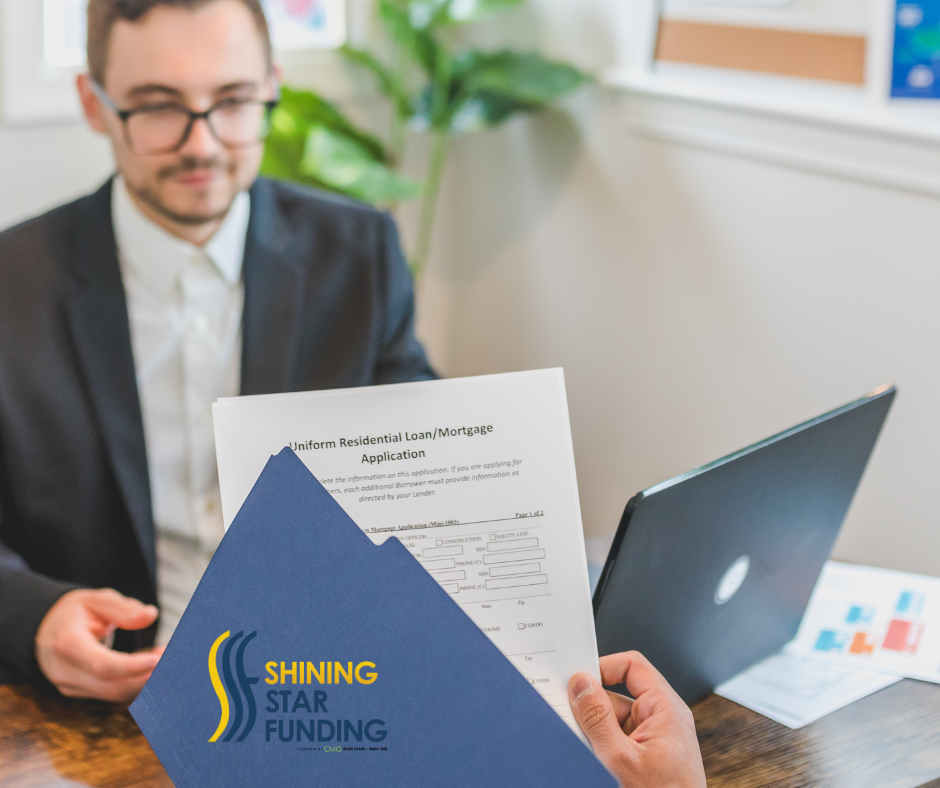
To Apply for a Bank Statement Loan Mortgage, you must first gather comprehensive documentation, generally including 12 or 24 months of complete and consecutive bank statements that are current within 60 to 90 days of the note date. Additionally, borrowers are required to provide a signed written business narrative detailing the nature of the business and verification proving at least two years of business ownership, while maximizing approval by maintaining consistent deposit patterns and responding promptly to requests for additional documentation

Shining Star Funding

527 Sycamore Valley Rd W, Danville, CA 94526
Toll Free Call : (866) 280-0020

For informational purposes only. No guarantee of accuracy is expressed or implied. Programs shown may not include all options or pricing structures. Rates, terms, programs and underwriting policies subject to change without notice. This is not an offer to extend credit or a commitment to lend. All loans subject to underwriting approval. Some products may not be available in all states and restrictions may apply. Equal Housing Opportunity.
Interactive calculators are self-help tools. Results received from this calculator are designed for comparative and illustrative purposes only, and accuracy is not guaranteed. Shining Star Funding is not responsible for any errors, omissions, or misrepresentations. This calculator does not have the ability to pre-qualify you for any loan program or promotion. Qualification for loan programs may require additional information such as credit scores and cash reserves which is not gathered in this calculator. Information such as interest rates and pricing are subject to change at any time and without notice. Additional fees such as HOA dues are not included in calculations. All information such as interest rates, taxes, insurance, PMI payments, etc. are estimates and should be used for comparison only. Shining Star Funding does not guarantee any of the information obtained by this calculator.

Privacy Policy | Accessibility Statement | Term of Use | NMLS Consumer Access 

CMG Mortgage, Inc. dba Shining Star Funding, NMLS ID# 1820 (www.nmlsconsumeraccess.org, www.cmghomeloans.com), Equal Housing Opportunity. Licensed by the Department of Financial Protection and Innovation (DFPI) under the California Residential Mortgage Lending Act No. 4150025. To verify our complete list of state licenses, please visit www.cmgfi.com/corporate/licensing