
Is Buying A House A Good Investment
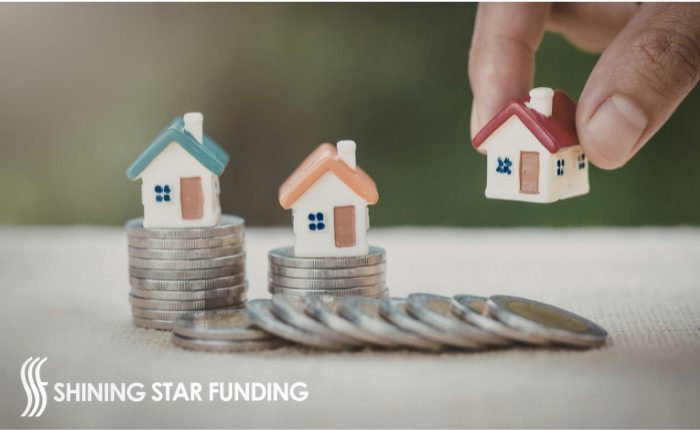
Is Buying a House a Good Investment? Navigating Wealth and Lifestyle in Today’s Market
The age-old debate of renting versus buying is more than just a financial calculation; it is a crossroads of lifestyle aspirations and long-term security. For many, the American Dream is anchored in property ownership, yet as markets shift, many people find themselves asking: is buying a house a good investment in the current economic climate? Whether you are a first-time homebuyer, self-employed, or a retiree looking to park capital into a tangible asset, understanding the mechanics of real estate is the first step in preparing to buy.
Real estate has historically been one of the most reliable ways to build generational wealth. Unlike stocks, which can be volatile and abstract, a home provides a dual utility: it is a roof over your head and a growing financial engine. However, the answer to whether is a home a good investment depends heavily on your timeline, your financial health, and your personal goals. By looking at both the ledger and the lifestyle, we can determine if taking the plunge into homeownership is the right move for your portfolio.
Why Buying a House is a Good Investment
When we look at the historical data, real estate often keeps pace with or exceeds inflation. This makes it a powerful hedge against the eroding purchasing power of currency. But the “why” goes deeper than just rising prices. It’s about how the structure of a mortgage works in your favor over time.
Money Saved on Rent
One of the most immediate benefits of homeownership is the elimination of “dead money.” When you rent, 100% of your monthly housing payment goes to your landlord’s equity or mortgage. When you own, a portion of every payment goes toward the principal balance of your loan. Over decades, this forced savings mechanism builds substantial net worth. Furthermore, while rents tend to rise every year due to inflation and market demand, a fixed-rate mortgage keeps your housing costs stable for 15 to 30 years. When you are preparing to buy, you are essentially locking in your cost of living for the next few decades.
Greater Financial Stability
Financial stability comes from predictability. Homeowners with fixed-rate mortgages are shielded from the volatility of the rental market. This stability is particularly beneficial for self-employed individuals or retirees who need to manage their cash flow with precision. Knowing exactly what your “rent” will be in the year 2040 provides a level of peace of mind that no lease agreement can offer. Over time, as your income likely increases and your mortgage remains the same, your housing costs actually become a smaller percentage of your overall budget.
Tax Deductions
The government often incentivizes homeownership through various tax breaks. In many regions, you can deduct the interest paid on your mortgage and your property taxes from your taxable income. For asset-rich individuals or high earners, these deductions can result in thousands of dollars in savings every year. These incentives are a key reason why many financial advisors suggest that is it worth buying a house even if the market growth is moderate, as the tax savings effectively lower the “real” cost of the investment.
Lifestyle Benefits
Beyond the spreadsheets, a home is an investment in your quality of life. Ownership grants you the agency to renovate, landscape, and customize your environment without seeking a landlord’s permission. This sense of permanence and community connection often leads to better social outcomes and a higher sense of personal satisfaction. For many, the psychological “dividend” of owning the land beneath their feet is just as valuable as the financial appreciation.
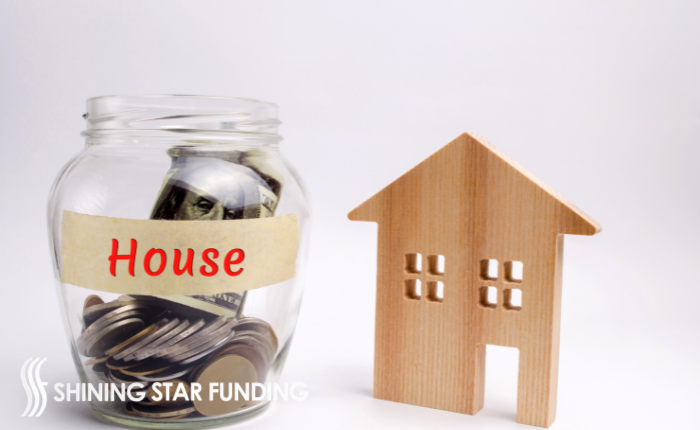
Why You Might Not Think of a House as a Good Investment
While the pros are compelling, homeownership is not a guaranteed win for everyone. There are specific scenarios where the math might favor staying mobile or keeping your capital in more liquid assets. As you are preparing to buy, it is vital to be honest about the potential downsides.
Short-Term Ownership May Not Build Enough Equity
Real estate is a slow-burn investment. Because of the high transaction costs—closing costs, real estate agent commissions, and moving expenses—it often takes five to seven years just to break even. If you plan to move in two or three years, you might find that you haven’t built enough equity to cover the costs of selling. In the early years of a mortgage, the vast majority of your payment goes toward interest, not the principal. This is why when considering is buying a house a good investment, the answer is almost always “yes” for the long term and “maybe” for the short term.
Your Lifestyle Priorities
Ownership comes with a loss of flexibility. If your career requires you to be mobile or if you enjoy the ability to change neighborhoods every year, the “golden handcuffs” of a mortgage might feel more like a burden than a benefit. For some, the freedom to pick up and leave is more valuable than the equity gained in a specific ZIP code.
Ongoing Costs of Home Maintenance
When you rent, the landlord is responsible for the leaking roof and the broken water heater. When you own, those costs fall squarely on your shoulders. Financial experts suggest setting aside 1% to 2% of the home’s value annually for maintenance. If you don’t factor these costs into your initial calculations of invested vs finance when purchasing a house, you might find your “investment” draining your monthly savings. Maintenance is the “unseen” cost that can turn a great property into a financial headache if you aren’t prepared.
Preference for Urban Living
In many major metropolitan hubs, the price-to-rent ratio is skewed. In cities like New York, San Francisco, or London, it is often significantly cheaper to rent a high-end apartment than it is to pay the mortgage, taxes, and HOA fees on a similar unit. If your lifestyle is centered around high-density urban areas where inventory is scarce and prices are astronomical, you might find that your capital performs better in a diversified stock portfolio while you continue to rent.
Why Location Matters
In real estate, the mantra “location, location, location” remains undefeated. You can change the paint, the kitchen, and the flooring, but you can never change the plot of land. The location determines the floor and the ceiling of your investment’s potential. Factors such as school district quality, proximity to employment hubs, and local zoning laws play a massive role in how a property appreciates. Even in a down market, homes in highly desirable areas tend to hold their value better than those in the periphery. Understanding the local micro-market is a critical part of the process when you are preparing to buy.
Strategy: How to Invest to Buy House in 10 Years
If you are not ready to purchase today but want to ensure you can afford your dream home a decade from now, your strategy should focus on aggressive savings and smart asset allocation. Thinking about how to invest to buy house in 10 years involves moving away from low-yield savings accounts and toward diversified index funds or ETFs that can outpace inflation. By the time you reach year seven or eight, you should begin shifting that capital into more stable, liquid assets to ensure the down payment is protected from a sudden market dip. This long-term planning ensures that when the right opportunity arises, you have the financial “dry powder” to act.
Financial Nuance: Invested vs Finance When Purchasing a House
A common point of confusion for new buyers is the balance of invested vs finance when purchasing a house. Should you put down the minimum 3.5% or 5% and keep your remaining cash in the stock market? Or should you put down 20% or more to avoid private mortgage insurance (PMI) and lower your monthly outlay? The answer depends on the current interest rates. If mortgage rates are low, it often makes sense to finance more of the home and keep your cash invested in higher-yielding assets. If rates are high, “investing” in your own home by making a larger down payment provides a guaranteed “return” in the form of avoided interest costs.
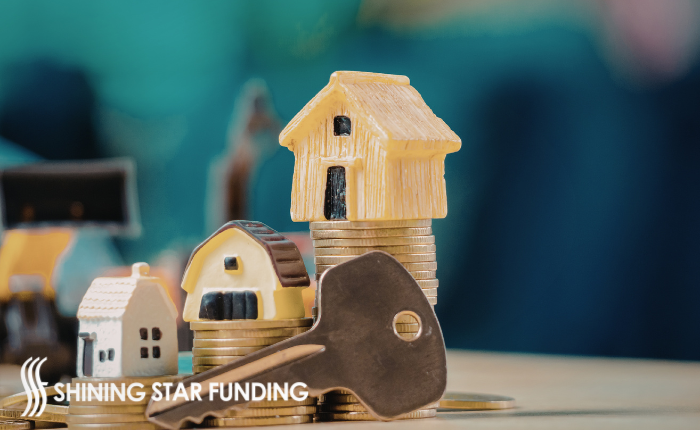
Should You Buy a Home?
Ultimately, determining if is a home a good investment comes down to your personal “Why.” If you are looking for a place to raise a family, gain a sense of belonging, and slowly build a nest egg over 20 years, then buying a house is almost certainly one of the best financial moves you can make. It offers a combination of leverage, tax advantages, and utility that no other asset class can match.
However, if you are feeling pressured by societal expectations but your finances are stretched thin or your career is in flux, it is okay to wait. The best investment is the one that allows you to sleep at night. Take the time to audit your debt-to-income ratio, save for a healthy down payment, and research the neighborhoods that align with your future. When you approach the market with a clear head and a long-term vision, you transform a simple transaction into a foundation for lifelong wealth.
FAQ's
You can change everything about a house except its location. A home in a neighborhood with top-rated schools, low crime, and proximity to major employers will appreciate much faster than a beautiful home in a declining area. In real estate, the “investment” is often more about the land and the zip code than the bricks and mortar.
In many dense urban centers, the cost to buy a condo is significantly higher than the cost to rent a similar unit. If you enjoy being in the heart of a city where the “price-to-rent ratio” is skewed, you might find that renting and investing your extra cash in the stock market yields a better financial return.
A major “con” is that you are now the landlord. Experts suggest budgeting 1% to 3% of your home’s value annually for maintenance and repairs. From a leaking roof to a broken HVAC system, these unrecoverable costs can eat into the profit you expect to make when you eventually sell.
A house is a “tether.” If your career requires frequent relocation or you value the freedom to travel for months at a time, the responsibilities of homeownership may be a burden rather than a benefit. In this case, the flexibility of renting might be a better “investment” in your personal goals.
If you plan to move in less than three to five years, buying is often a losing game. This is because of the high “entry and exit” costs (closing costs and agent commissions). It takes time for property appreciation to outpace these initial expenses; if you sell too soon, you might actually lose money.
Investment isn’t always about dollars; it’s about “psychic income.” Ownership gives you total control over your environment. You can renovate, landscape, or keep pets without seeking a landlord’s permission. This sense of permanence and community connection is a major “soft” return on the investment.
The federal government incentivizes homeownership through several tax breaks. Homeowners can often deduct mortgage interest and property taxes (up to certain limits) from their taxable income. Additionally, when you sell your primary residence, you may be eligible to exclude up to $250,000 (single) or $500,000 (married) of the profit from capital gains taxes.
Yes. If you have a fixed-rate mortgage, your principal and interest payments remain the same for the life of the loan. This protects you from the “rent hikes” that many tenants face annually, allowing you to plan your long-term financial future with much higher certainty.
When you rent, your “return on investment” is 0%; that money is gone forever. When you own, a portion of your monthly payment goes toward the principal of your loan. Over 15 to 30 years, you eventually eliminate your housing payment entirely, whereas rent prices typically continue to rise with inflation.
Buying a house is often seen as a “forced savings account.” Unlike most purchases, real estate historically appreciates over time. Beyond the potential for a higher resale price, it allows you to build equity—the portion of the home you truly own—with every mortgage payment you make, rather than giving that money to a landlord.

527 Sycamore Valley Rd W, Danville, CA 94526
Toll Free Call : (866) 280-0020
For informational purposes only. No guarantee of accuracy is expressed or implied. Programs shown may not include all options or pricing structures. Rates, terms, programs and underwriting policies subject to change without notice. This is not an offer to extend credit or a commitment to lend. All loans subject to underwriting approval. Some products may not be available in all states and restrictions may apply. Equal Housing Opportunity.
Interactive calculators are self-help tools. Results received from this calculator are designed for comparative and illustrative purposes only, and accuracy is not guaranteed. Shining Star Funding is not responsible for any errors, omissions, or misrepresentations. This calculator does not have the ability to pre-qualify you for any loan program or promotion. Qualification for loan programs may require additional information such as credit scores and cash reserves which is not gathered in this calculator. Information such as interest rates and pricing are subject to change at any time and without notice. Additional fees such as HOA dues are not included in calculations. All information such as interest rates, taxes, insurance, PMI payments, etc. are estimates and should be used for comparison only. Shining Star Funding does not guarantee any of the information obtained by this calculator.
Privacy Policy | Accessibility Statement | Term of Use | NMLS Consumer Access
CMG Mortgage, Inc. dba Shining Star Funding, NMLS ID# 1820 (www.nmlsconsumeraccess.org, www.cmghomeloans.com), Equal Housing Opportunity. Licensed by the Department of Financial Protection and Innovation (DFPI) under the California Residential Mortgage Lending Act No. 4150025. To verify our complete list of state licenses, please visit www.cmgfi.com/corporate/licensing