
What Credit Score Is Needed to Buy a House
Unlocking the Door: What Credit Score Is Needed to Buy a House?
In the evolving real estate landscape of 2026, the journey to property ownership remains as much a financial marathon as it is an emotional milestone. At the heart of this journey lies a three-digit number that holds the power to dictate your options, your interest rates, and ultimately, the neighborhood where you’ll plant your roots. Understanding what credit score is needed to buy a house is the first essential step in preparing to buy. Whether you are a first-time homebuyer or an asset-rich individual seeking for real estate investments, your credit profile is the primary language lenders use to measure your reliability.
While high-interest rates and fluctuating inventory continue to define the current market, your credit score remains a variable you can control. For self-employed home buyers or retirees looking to optimize their cash flow, a difference of just 20 points on a credit report can translate into thousands of dollars in savings over the life of a loan. As you enter the phase of preparing to buy, viewing your credit score as a dynamic asset rather than a static grade will empower you to navigate the homebuying process with confidence and precision.
What’s the Minimum Credit Score to Buy a House?
The “minimum” score is not a single, universal number. Instead, it varies based on the type of loan program you choose and the lender’s individual appetite for risk. In 2026, the baseline requirements for the most common mortgage types are as follows:
- Conventional Loans: Typically require a minimum score of 620. These are the gold standard for many buyers, offering flexible terms but demanding higher credit health.
- FHA Loans: Designed for accessibility, FHA loans allow for scores as low as 500 if you provide a 10% down payment. If your score is 580 or higher, the down payment requirement drops to just 3.5%.
- VA Loans: While the Department of Veterans Affairs does not set a hard minimum, most lenders look for a score between 580 and 620 to approve these $0-down benefit loans.
- USDA Loans: Aimed at rural and some suburban buyers, these usually require a 640 minimum for automatic approval, though some lenders offer manual underwriting for scores as low as 580.
- Jumbo Loans: For high-value properties exceeding conforming limits, expect to need a score of at least 700 to 720.
Why Your Credit Score Matters When Buying a House
Lenders view your credit score as a predictive tool. It tells them how likely you are to make your payments on time over the next 15 to 30 years. However, its impact goes far beyond simple approval or denial. In the current market, your score acts as a lever for the “price” of your loan.
A higher score almost always translates to a lower interest rate. Even a 0.5% difference in your Annual Percentage Rate (APR) can significantly alter your monthly budget. Furthermore, for those preparing to buy with less than 20% down, your credit score directly influences the cost of Private Mortgage Insurance (PMI). Borrowers with “Exceptional” scores pay a fraction of the PMI premiums compared to those in the “Fair” range, adding another layer of long-term savings.
Major Factors Affecting Your Credit Score
To move the needle on your score, you must understand the analytical “ingredients” that FICO and VantageScore use. In 2026, these factors are weighted differently, but the core principles remain the same:
- Payment History (35%): This is the most critical factor. Even one 30-day late payment can cause your score to plummet.
- Amounts Owed / Credit Utilization (30%): This measures how much of your available credit you are using. Lenders prefer this to be below 30%. For example, if you have a $10,000 limit, try to keep your balance under $3,000.
- Length of Credit History (15%): The “age” of your accounts matters. Lenders like to see that you have a long, stable history of managing debt.
- Credit Mix (10%): A healthy variety of debt—such as a mix of credit cards (revolving) and car loans (installment)—can provide a slight boost.
- New Credit (10%): Opening too many new accounts in a short period signals risk. During the months you are preparing to buy, it is best to avoid any new credit inquiries.
What’s a "Good" Credit Score?
In the eyes of a mortgage underwriter, “good” is a spectrum. In 2026, the tiers of credit health are generally categorized as follows:
- Exceptional (800 – 850): You are the ideal borrower. You will qualify for the lowest possible rates and the most favorable terms.
- Very Good (740 – 799): You will easily qualify for almost any loan program and receive highly competitive interest rates.
- Good (670 – 739): This is the average range for many U.S. borrowers. You will likely qualify for standard conventional loans with good rates.
- Fair (580 – 669): You may face higher interest rates and more scrutiny. You might find government-backed options (FHA/VA) more advantageous here.
- Poor (300 – 579): You will likely need to focus on credit repair before a lender will approve a mortgage, unless you are making a very large down payment on an FHA loan.
How to Increase Your Credit Score Before Buying a House
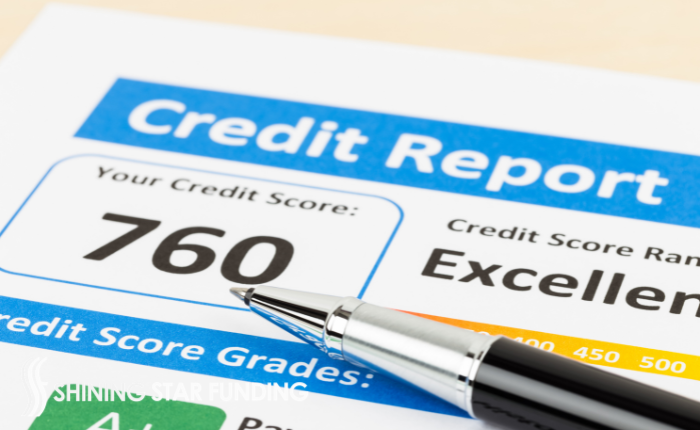
If your current score isn’t where you want it to be, don’t lose heart. Credit is a marathon, not a sprint, and there are several tactical moves you can make to see a boost within a few months.
- Check for Errors: Pull your free annual credit reports from Equifax, Experian, and TransUnion. Disputing even a single inaccurate late payment can result in a significant score jump.
- Pay Down High Balances: Reducing your credit utilization is often the fastest way to see a change. If you have extra cash, focus on paying down high-balance cards first.
- Try Rent Reporting: In 2026, many services allow you to report your on-time rent, utility, and telecom payments to the bureaus. For younger buyers with “thin” files, this can add valuable points quickly.
- Become an Authorized User: Ask a family member with a long history of perfect payments if they can add you to one of their older accounts. You don’t even need to use the card for their positive history to help your score.
- Avoid Closing Old Accounts: Even if you don’t use an old card, keep it open. Closing it could shorten your credit age and increase your overall utilization ratio.

Qualification Factors That Lenders Consider
While the question of “what credit score is needed to buy a house” is vital, it is only one piece of the puzzle. Lenders take a holistic look at your entire financial life. Even with a 750 score, you could be denied if you don’t meet these other critical benchmarks:
| Factor | What Lenders Look For |
|---|---|
| Debt-to-Income (DTI) | The percentage of your gross monthly income that goes toward debt. Most lenders look for 43% or lower. |
| Employment Stability | Usually at least two years of consistent income in the same field or industry. |
| Cash Reserves | Money in the bank after the down payment to cover 2–6 months of mortgage payments. |
| Down Payment | The cash you bring to the table. Larger down payments can sometimes offset a slightly lower credit score. |
Conclusion: Setting the Stage for Success
Your credit score is the key that unlocks the door to homeownership. By understanding the minimum requirements and the factors that drive your score, you can navigate the path of preparing to buy with clarity and purpose. Whether you are aiming for a 620 to get your foot in the door or an 800 to secure the best possible deal, every point matters. Start your preparation today, monitor your progress, and remember that the effort you put into your credit now will pay dividends for decades to come in the home you’ve always wanted.
FAQ's
Lenders typically pull the “middle” score from all three major bureaus (Experian, Equifax, and TransUnion) for each borrower. In most cases, they will use the lower of the two borrowers’ middle scores to determine eligibility. Some programs, like those from Fannie Mae, may allow for an average of the two scores.
Yes. For conventional loans, the cost of Private Mortgage Insurance (PMI) is directly tied to your credit score. A lower score means a higher monthly PMI premium. For FHA loans, mortgage insurance premiums (MIP) are generally the same regardless of your score.
It is possible but difficult. You may be restricted to FHA loans which require a 10% down payment if your score is between 500–579. Many lenders (including Rocket Mortgage) may choose not to lend to borrowers below 580 to avoid “subprime” lending risks.
No. Checking your own score (a “soft inquiry”) does not impact your credit. However, when you apply for a mortgage, the lender performs a “hard inquiry,” which may temporarily dip your score by a few points.
A good score is only one piece of the puzzle. Lenders also evaluate:
Debt-to-Income (DTI) Ratio: The percentage of your gross monthly income that goes toward debt.
Employment History: Usually 2 years of steady income in the same field.
Assets: Your savings for a down payment, closing costs, and “cash reserves.”
Down Payment Amount: Larger down payments can sometimes offset a lower credit score.
If you are 6–12 months away from buying, try these steps:
Pay down credit card balances: Aim to keep your utilization below 30% (ideally below 10%).
Dispute errors: Check your credit report for mistakes and file disputes.
Avoid new debt: Don’t open new credit cards or take out auto loans right before applying.
Ask for higher limits: Increasing your limit (without spending more) lowers your utilization ratio.
Credit scores generally fall into these ranges:
Exceptional: 800 – 850
Very Good: 740 – 799
Good: 670 – 739
Fair: 580 – 669
Poor: 300 – 579 Aiming for a score of 740 or higher typically qualifies you for the best interest rates and lowest fees.
FICO® scores, which most lenders use, are calculated based on five main components:
Payment History (35%): Do you pay bills on time?
Amounts Owed (30%): How much of your available credit are you using (utilization)?
Length of Credit History (15%): How long have your accounts been open?
Credit Mix (10%): Do you have a variety of accounts (credit cards, auto loans, etc.)?
New Credit (10%): How many new accounts or inquiries have you had recently?
Your credit score is a primary indicator of “risk.” Lenders use it to determine two things: eligibility (whether they will give you a loan at all) and pricing (your interest rate). A higher score proves you have a history of managing debt responsibly, which makes lenders more willing to offer you lower interest rates, saving you tens of thousands of dollars over the life of the loan.
While requirements vary by lender and loan type, the general industry minimums are:
Conventional Loan: Usually 620.
FHA Loan: As low as 500 (with a 10% down payment) or 580 (with a 3.5% down payment).
VA and USDA Loans: Often no official government minimum, but many lenders require at least a 580–640.
Note: Rocket Mortgage typically requires a minimum of 580 for FHA and VA loans.

527 Sycamore Valley Rd W, Danville, CA 94526
Toll Free Call : (866) 280-0020
For informational purposes only. No guarantee of accuracy is expressed or implied. Programs shown may not include all options or pricing structures. Rates, terms, programs and underwriting policies subject to change without notice. This is not an offer to extend credit or a commitment to lend. All loans subject to underwriting approval. Some products may not be available in all states and restrictions may apply. Equal Housing Opportunity.
Interactive calculators are self-help tools. Results received from this calculator are designed for comparative and illustrative purposes only, and accuracy is not guaranteed. Shining Star Funding is not responsible for any errors, omissions, or misrepresentations. This calculator does not have the ability to pre-qualify you for any loan program or promotion. Qualification for loan programs may require additional information such as credit scores and cash reserves which is not gathered in this calculator. Information such as interest rates and pricing are subject to change at any time and without notice. Additional fees such as HOA dues are not included in calculations. All information such as interest rates, taxes, insurance, PMI payments, etc. are estimates and should be used for comparison only. Shining Star Funding does not guarantee any of the information obtained by this calculator.
Privacy Policy | Accessibility Statement | Term of Use | NMLS Consumer Access
CMG Mortgage, Inc. dba Shining Star Funding, NMLS ID# 1820 (www.nmlsconsumeraccess.org, www.cmghomeloans.com), Equal Housing Opportunity. Licensed by the Department of Financial Protection and Innovation (DFPI) under the California Residential Mortgage Lending Act No. 4150025. To verify our complete list of state licenses, please visit www.cmgfi.com/corporate/licensing