
FICO Score for Mortgage Lenders

FICO Score for Mortgage Lenders: Unlocking the Keys to Your New Home
In the grand tapestry of homeownership, your credit profile is the thread that holds your financial aspirations together. As we navigate the complex economic landscape of 2026, the traditional benchmarks for securing a loan have evolved. Whether you are one of the many first-time homebuyers entering a competitive market, a self employed home buyer with fluctuating income streams, or a retiree looking to downsize into a more manageable space, your credit score for mortgage approval remains the single most influential number in your life. It dictates not just if you can buy, but how much you will pay for the privilege of borrowing.
For real estate investors and asset-rich individuals seeking for real estate investments, the nuances of credit scoring are tools for maximizing leverage. In 2026, the industry is witnessing a historic shift as modern scoring models, including FICO 10T and VantageScore 4.0, begin to play a larger role alongside the classic versions. This evolution is designed to create a more inclusive path to homeownership, but it also adds a layer of complexity that every borrower must master. Understanding which fico score for mortgage lenders is actually looking at—and why—is the first step in building a solid foundation for your future.
Which credit score do mortgage lenders use?
If you have checked your credit score on a mobile app recently, you might be surprised to learn that the number you see is likely not the one your lender will use. While there are dozens of credit scoring versions, the mortgage industry has historically relied on a specific set of older models known collectively as “Classic FICO.” This typically includes FICO Score 2 (Experian), FICO Score 5 (Equifax), and FICO Score 4 (TransUnion).
However, as of 2026, the Federal Housing Finance Agency (FHFA) has fully implemented a transition to more modern models for loans sold to Fannie Mae and Freddie Mac. Lenders are now increasingly utilizing FICO Score 10T and VantageScore 4.0. These newer models are “trended,” meaning they don’t just look at a snapshot of your debt today; they look at your financial behavior over the last 24 months. This is a massive win for those who pay down debt consistently, as the mortgage fico score now rewards positive long-term trends rather than just current balances.
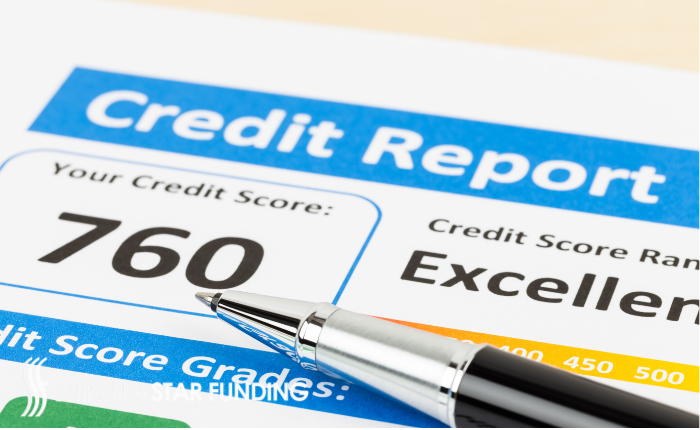
Small differences between FICO versions
Why does the specific version matter? Each iteration of the FICO score uses a slightly different algorithm to weigh your financial habits. Older versions might penalize you heavily for a single small collection account from years ago, while newer versions, like FICO 10T, are more forgiving of medical debt and place a greater emphasis on whether your total debt levels are rising or falling over time.
For retirees, these differences can be significant. If you have a high credit limit but low usage, older versions see you as a low risk, while trended models see the long-term stability of your lifestyle. For self employed home buyers, the move toward VantageScore 4.0 is particularly beneficial because it can incorporate “alternative data,” such as consistent rent and utility payments, which might not be captured in a traditional credit file. Understanding these subtle shifts is a key part of the homeownership journey in the modern era.
What factors impact your FICO score?
While the models change, the core pillars of your credit health remain relatively stable. To secure a competitive fico score for mortgage approval, you must understand the five primary factors that influence the math:
- Payment History (35%): This is the heavyweight champion of credit factors. Even a single 30-day late payment can cause a significant drop. In 2026, with the integration of rental history into many scores, consistent housing payments are more critical than ever.
- Amounts Owed (30%): Also known as credit utilization. Lenders want to see that you aren’t “maxed out.” For asset-rich individuals, keeping utilization below 10% is the gold standard, though 30% is the general threshold for most borrowers.
- Length of Credit History (15%): The longer your accounts have been open, the more predictable you are. This is why retirees often have the highest scores—they have decades of documented reliability.
- Credit Mix (10%): Lenders like to see that you can handle different types of debt, such as a car loan (installment) and a credit card (revolving).
- New Credit (10%): Opening several new accounts in a short period signals risk. If you are in the homeownership process, avoid applying for new credit cards or auto loans.
Do all mortgage lenders evaluate the same score?
The short answer is: No. While the vast majority of lenders follow the guidelines set by Fannie Mae and Freddie Mac, some “portfolio lenders”—who keep their loans in-house rather than selling them—may use their own proprietary scoring systems. Real estate investors often seek out these lenders because they can be more flexible with borrowers who have complex financial structures but high net worth.

Example: The Median Score Rule
When you apply for a mortgage, the lender pulls your report from all three bureaus (Equifax, Experian, and TransUnion). They don’t take the highest or the lowest; they take the middle score. For example, if your scores are 720, 680, and 695, the lender will use 695 as your qualifying credit score for mortgage terms. If you are applying with a co-borrower, most lenders will use the lower of the two applicants’ middle scores, although some new 2026 programs allow for an “average median score” to help partners with disparate credit histories qualify together.
What credit score do you need to get a mortgage?
| Loan Type | Typical Minimum Credit Score | Best For |
|---|---|---|
| Conventional Loan | 620 | Borrowers with strong credit and 3-20% down. |
| FHA Loan | 580 (with 3.5% down) | First-time homebuyers with lower scores. |
| VA Loan | 580 – 620 (Lender dependent) | Veterans and active-duty military. |
| USDA Loan | 640 | Rural homebuyers with low-to-moderate income. |
| Jumbo Loan | 700 – 720 | High-value properties and real estate investors. |

Next steps: How to improve your credit score to get a mortgage
If your score isn’t quite where it needs to be, don’t despair. Credit is dynamic, and in 2026, you have more tools than ever to move the needle. Here is how to prepare your profile for the homeownership leap:
- Check for Errors: One in four credit reports contains an error that could lower your score. Obtain your free reports and dispute any inaccuracies immediately.
- Pay Down Revolving Debt: Reducing your credit card balances is the fastest way to see a score increase. If you can get your utilization under 10%, your fico score for mortgage lenders will likely jump.
- Opt-in to Rent Reporting: Use services that report your on-time rent and utility payments to the bureaus. This “alternative data” is now a standard part of many 2026 scoring models.
- Don’t Close Old Accounts: Even if you don’t use a card, keep it open to preserve your length of credit history.
- Maintain a “Credit Freeze” Until Ready: Keep new inquiries to a minimum. Only “thaw” your credit when you are ready for a lender to perform a hard pull.
In conclusion, your mortgage fico score is more than just a number—it’s a reflection of your financial journey. By understanding the shift toward trended data and the specific requirements of different loan programs, you can take control of your path to homeownership. Whether you are buying your first condo or your fifth investment property, a strong credit foundation ensures that you are always in the driver’s seat. Start today, stay disciplined, and watch as those three digits open the door to your future.
FAQ's
If you pay off a large debt but don’t want to wait 30 days for the bureaus to update, your lender can request a “Rapid Rescore.” For a small fee, the credit bureau will update your score in 3 to 5 business days. This is a vital tool for first-time buyers who are just a few points away from a better “interest rate tier.”
Pay down revolving debt: This is the #1 way to see an immediate boost.
Don’t close old accounts: This helps your “length of history.”
Correct errors: Dispute any late payments or collections that aren’t yours.
Avoid new inquiries: Stop applying for new cards or car loans at least 6 months before you start the homebuying process.
This is the fastest way to move your score. If you have a $10,000 limit and a $5,000 balance, you are at 50% utilization. Lenders prefer to see this under 30%, and ideally under 10%. For self-employed home buyers who often use personal cards for business expenses, high utilization can accidentally tank a score right before a loan application.
“Educational scores” (like those from free monitoring sites) often use VantageScore 3.0. This model is more lenient toward high balances if they are eventually paid off. Mortgage-specific FICO models are designed to predict the likelihood of a 90-day delinquency on a large debt, making them naturally more “strict” and often 20 to 50 points lower than educational scores.
The “minimum” depends on the loan type:
Conventional: Typically 620 minimum.
FHA: As low as 580 (with 3.5% down) or 500 (with 10% down).
VA/USDA: Often 620, though there is no official government minimum.
Jumbo Loans: Usually 700 to 720 minimum. To get the absolute best interest rates, you generally need a 740 or higher.
Lenders typically pull all three scores for each borrower. They ignore the high and the low, focusing on the “middle” score.
Example: If Borrower A has scores of 680, 720, and 740, their qualifying score is 720. If they are applying with a co-borrower who has scores of 620, 640, and 660, the lender will use the lower of the two middle scores—meaning the entire loan is priced based on a 640 score.
Most do, especially if they plan to sell the loan to government-backed entities. However, some private lenders or firms catering to asset-rich individuals may use “proprietary” models that look more at your total assets or “residual income” rather than just a FICO number. Always ask your lender which specific model they use during the homebuying process.
Your score is a mathematical reflection of your reliability. The weights are generally:
Payment History (35%): Do you pay on time?
Amounts Owed (30%): How much of your available limit are you using?
Length of History (15%): How long have you managed credit?
Credit Mix (10%): Do you have cards, auto loans, and student loans?
New Credit (10%): Have you opened too many accounts lately?
Older versions (like FICO 2, 4, and 5) are much more sensitive to “isolated” late payments and high credit card utilization than newer models. For example, FICO 8 might ignore a small collection under $100, but the classic mortgage models will likely penalize you for it. These versions were built to be more conservative because the risk of a 30-year house loan is much higher than a credit card.
While you may be familiar with FICO Score 8 or 9 from your credit card statements, mortgage lenders primarily use “classic” versions of the FICO score. These are specifically:
Equifax: Beacon 5.0
Experian: FICO Risk Model v2
TransUnion: FICO Risk Score 04 In 2026, the industry is also transitioning toward FICO 10 T and VantageScore 4.0, which use “trended data” to see if your balances are growing or shrinking over time.

527 Sycamore Valley Rd W, Danville, CA 94526
Toll Free Call : (866) 280-0020
For informational purposes only. No guarantee of accuracy is expressed or implied. Programs shown may not include all options or pricing structures. Rates, terms, programs and underwriting policies subject to change without notice. This is not an offer to extend credit or a commitment to lend. All loans subject to underwriting approval. Some products may not be available in all states and restrictions may apply. Equal Housing Opportunity.
Interactive calculators are self-help tools. Results received from this calculator are designed for comparative and illustrative purposes only, and accuracy is not guaranteed. Shining Star Funding is not responsible for any errors, omissions, or misrepresentations. This calculator does not have the ability to pre-qualify you for any loan program or promotion. Qualification for loan programs may require additional information such as credit scores and cash reserves which is not gathered in this calculator. Information such as interest rates and pricing are subject to change at any time and without notice. Additional fees such as HOA dues are not included in calculations. All information such as interest rates, taxes, insurance, PMI payments, etc. are estimates and should be used for comparison only. Shining Star Funding does not guarantee any of the information obtained by this calculator.
Privacy Policy | Accessibility Statement | Term of Use | NMLS Consumer Access
CMG Mortgage, Inc. dba Shining Star Funding, NMLS ID# 1820 (www.nmlsconsumeraccess.org, www.cmghomeloans.com), Equal Housing Opportunity. Licensed by the Department of Financial Protection and Innovation (DFPI) under the California Residential Mortgage Lending Act No. 4150025. To verify our complete list of state licenses, please visit www.cmgfi.com/corporate/licensing