
Buying a House with a 580 Credit Score: The Step-by-Step Blueprint to Homeownership
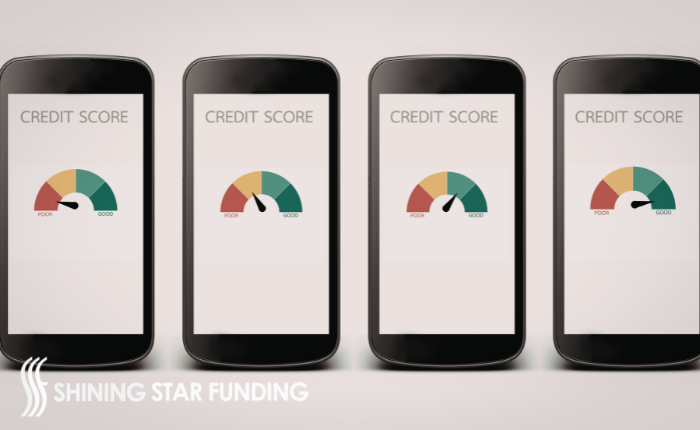
Step 1: Understand Your Current Position in the Lending Landscape
The journey toward homeownership is one of the most rewarding milestones you can experience, offering long-term financial security and a space to call your own. However, when you start reviewing your financial background, a less-than-perfect score can make the process feel intimidating. For first-time homebuyers, self-employed individuals with variable revenue streams, retirees looking to downsize, or asset-rich investors seeking non-traditional real estate investments, managing your qualification metrics is paramount. If you find yourself holding a 580 credit score, you might assume that your options are severely limited. Fortunately, this specific number represents a critical pivot point in the mortgage industry, opening doors that are firmly shut to lower brackets. Estimating your parameters with an online mortgage calculator helps anchor your financial targets before reviewing distant property options.
Navigating this landscape successfully requires an orderly approach centered on preparing to buy guidelines. By breaking the home-buying journey down into sequential, manageable steps, you can transition from worrying about your credit standing to confidently signing your closing documents. The modern real estate market accommodates varied financial profiles, provided you know exactly how the rules apply to your specific situation and how to leverage government-backed programs to your advantage.
Step 2: Recognize the Significance of the 580 Threshold
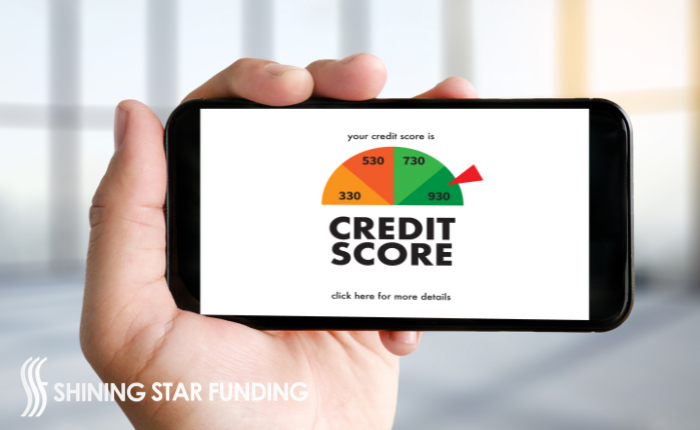
In the world of real estate financing, your three-digit rating serves as a primary tool for risk assessment. While a perfect history is always ideal, specific government agencies design programs specifically for individuals who fall into lower ranges. When looking at buying a house with a 580 credit score, you are standing exactly on the borderline that separates standard flexible financing from high-risk manual underwriting. This number is highly significant, particularly when dealing with FHA loans channels. For an exact review of official guidelines, consulting the benchmark FHA loan requirements confirms standard agency limits.
Falling slightly above or below this baseline changes the entire structure of your loan application. For instance, an applicant with a 587 credit score or a 597 credit score is treated with a completely different set of underwriting rules than someone sitting just a few points lower. Understanding this distinction allows you to strategically analyze your financial profile before talking to financing professionals, ensuring you enter the market at the most advantageous time possible.
Step 3: Analyze Your Options within the 550-619 FHA Bracket
Because conventional loans typically demand higher scores, the FHA framework becomes the primary vehicle for individuals navigating this tier. The broader 550-619 FHA category encompasses a wide range of borrowing behaviors, but it is split down the middle by the 580 benchmark. If your rating drops below 580, into the lower half of the 550-619 FHA spectrum, lenders view the application with heightened caution, necessitating significant offsetting factors to secure an approval. For contextual guidance, reviewing our step-by-step tutorial on how to get a mortgage or discovering whether checking options via a hard query will reveal if does getting preapproved hurt your credit metrics maps out stable boundaries.
When you are aggressively preparing to buy, knowing these internal brackets helps you set realistic expectations for your cash reserves. If you can cross into the upper half of this range, your pathway becomes remarkably smoother, with fewer bureaucratic hoops to jump through and more predictable terms from the underwriting team.
Step 4: Evaluate Down Payment Tiers and Financial Requirements
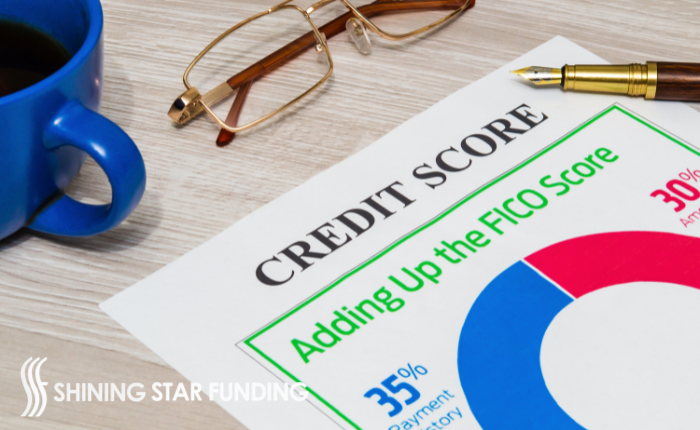
The explicit beauty of hitting or exceeding the 580 mark lies within the down payment rules established by federal regulators. The relationship between your rating and the required equity stake is tightly coordinated. To clarify how these tiers break down for different scores within the lower-to-middle credit ranges, review the following analytical table:
| Credit Score Range | Minimum Down Payment | Underwriting Type | Required Cash Reserve Profile |
|---|---|---|---|
| 500 to 579 | 10.0% | Strict Manual Review | High reserves required; strong alternative lines of credit needed. |
| 580 to 619 | 3.5% | Automated or Manual | Standard down payment; moderate reserves recommended. |
| 620 and Above | 3.0% to 3.5% | Streamlined Automated | Flexible terms; accessible for conventional or FHA paths. |
Step 5: Prepare for the Realities of a 587 Credit Score or 597 Credit Score
If your rating is slightly higher than the minimum—perhaps resting at a 587 credit score or climbing up toward a 597 credit score—you remain within the FHA’s preferred tier for maximum financing, but you are still subject to certain scrutiny. In this range, automated underwriting systems may pass your file through seamlessly, or they may refer it to a human underwriter for a manual review based on other aspects of your file, such as your total debt load. To explore similar score behaviors and optimization techniques across our centralized library, browsing our homebuyer resources hub provides total technical clarity.
During this phase of preparing to buy, you must focus on cleaning up your bank statements. Underwriters will review your income stability, your employment history, and your debt-to-income ratio. Having a score like a 597 credit score means you are very close to crossing the 620 conventional threshold, making it highly beneficial to ensure that no recent late payments or high revolving balances pull you backward during the critical underwriting window.
Step 6: Eliminate Lender Overlays and Extraneous Debts
Even though federal guidelines explicitly permit buying a house with a 580 credit score at a 3.5% down payment, individual financial institutions have the right to impose stricter standards, known in the industry as lender overlays. A specific bank might decide that despite federal allowance, their company policy requires a minimum of 600 or 620 for all residential originations. Before locked limits lock down your property search, tracking current trends using our real-time rates page ensures absolute transparent timing advantage.
Your sixth step must be to shop around for specialized mortgage brokers who work directly with investor-friendly and flexible wholesale lenders that adhere strictly to the baseline FHA rules without adding arbitrary overlays. Concurrently, you should focus on eliminating any small collections, resolving outstanding tax lines, and reducing credit card balances to ensure your application sails through the approval process without unexpected roadblocks.
Step 7: Assemble Your Specialized Professional Team
The final step in your homeownership blueprint is gathering an experienced group of professionals who specialize in non-traditional financing. Trying to navigate credit complexities independently often leads to missed opportunities or costly mistakes. You need an independent mortgage specialist who knows how to present manual underwriting files, a real estate agent who understands how to negotiate seller concessions for closing costs, and a structured financial planner. Once you feel confident in your preparation parameters and are ready to anchor an automated pre-approval file, you can securely apply now to launch your system records with our team.
By relying on expert guidance and keeping your efforts anchored on proper financial formatting, you can confidently navigate the buying process. A lower rating is simply a temporary hurdle, not a permanent barrier. With a clear step-by-step strategy, a firm grasp of underlying loan criteria, and a dedicated team by your side, you can successfully turn your property ownership goals into a tangible, wealth-building reality.
Frequently Asked Questions
Generally, no. Most conventional loans require a 620+ minimum credit score, and securing premium interest rates usually requires scores of 700 or above. A 580 score sits strictly below standard conventional automated underwriting thresholds, making alternative paths necessary.
Sometimes, but not always easily. The USDA prefers a minimum credit score of 640 for streamlined automated approval. Falling at 580 means your file will be routed to a strict manual underwriting review where strong income stability and a low debt-to-income ratio are required.
Yes, potentially. The Department of Veterans Affairs does not establish an official minimum credit score requirement to qualify for its backing. While individual private mortgage lenders often enforce overlays between 580 and 620, an eligible military borrower with strong income can realistically secure approval.
Yes. FHA loans are specifically engineered for this bracket, establishing a 580 credit score as the baseline milestone required to access maximum financing with a low 3.5% down payment. It is widely considered the optimal sweet spot for FHA qualification success.
If you want to optimize your terms, focus aggressively on paying down credit card balances, avoiding new debt inquiries, and fixing report errors. Even a marginal migration from a 580 to a 597 credit score can significantly improve loan pricing and lower long-term monthly outlays.
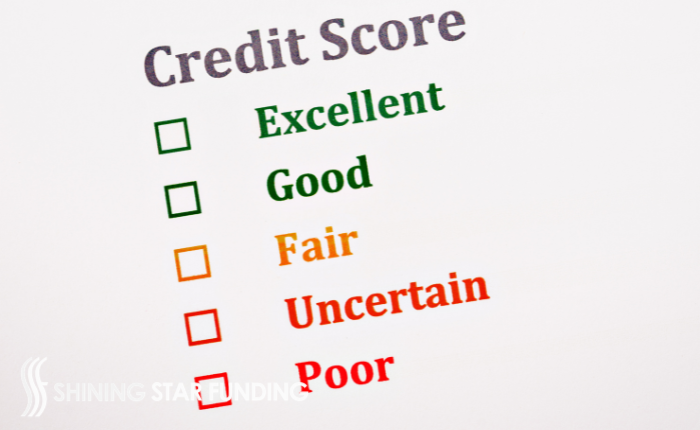
Yes. A 580 credit score is categorized as a fair rating within the housing industry and is widely accepted across government-backed programs. While you will not qualify for elite premium interest tiers, it remains perfectly sufficient for securing legitimate homeownership.
The broader 550–619 FHA credit score bracket is entirely workable, but criteria tighten considerably below the 580 mark. Falling below 580 often brings higher mortgage insurance terms and stricter debt reviews, whereas reaching 580 makes your underwriting process standard and highly predictable.
Pros include gaining access to flexible FHA financing with a minimal 3.5% down payment, allowing you to build equity instead of renting. Cons involve paying higher baseline interest rates and navigating mandated mortgage insurance parameters alongside fewer competitive product options.
The phrase refers to federal guidelines permitting borrowers with lower credit scores (between 500 and 579) to qualify for an FHA loan by providing a larger 10% down payment. Reaching a 580 score eliminates this mandate, immediately unlocking the lower three and a half percent down payment tier.
With a 580 credit score, your available mortgage paths primarily consist of FHA financing and VA loans if you carry military eligibility. Sibling structures like USDA loans are accessible via manual evaluation, while standard conventional options remain exceptionally rare.

527 Sycamore Valley Rd W, Danville, CA 94526
Toll Free Call : (866) 280-0020
For informational purposes only. No guarantee of accuracy is expressed or implied. Programs shown may not include all options or pricing structures. Rates, terms, programs and underwriting policies subject to change without notice. This is not an offer to extend credit or a commitment to lend. All loans subject to underwriting approval. Some products may not be available in all states and restrictions may apply. Equal Housing Opportunity.
Interactive calculators are self-help tools. Results received from this calculator are designed for comparative and illustrative purposes only, and accuracy is not guaranteed. Shining Star Funding is not responsible for any errors, omissions, or misrepresentations. This calculator does not have the ability to pre-qualify you for any loan program or promotion. Qualification for loan programs may require additional information such as credit scores and cash reserves which is not gathered in this calculator. Information such as interest rates and pricing are subject to change at any time and without notice. Additional fees such as HOA dues are not included in calculations. All information such as interest rates, taxes, insurance, PMI payments, etc. are estimates and should be used for comparison only. Shining Star Funding does not guarantee any of the information obtained by this calculator.
Privacy Policy | Accessibility Statement | Term of Use | NMLS Consumer Access
CMG Mortgage, Inc. dba Shining Star Funding, NMLS ID# 1820 (www.nmlsconsumeraccess.org, www.cmghomeloans.com), Equal Housing Opportunity. Licensed by the Department of Financial Protection and Innovation (DFPI) under the California Residential Mortgage Lending Act No. 4150025. To verify our complete list of state licenses, please visit www.cmgfi.com/corporate/licensing