
Buying a House with a 500 Credit Score: The Ultimate Educational Blueprint

The dream of owning a home is a cornerstone of financial independence, representing stability, wealth building, and a place to call your own. Whether you are an aspiring first-time homebuyer, a self-employed professional with fluctuating revenue streams, a retiree looking to settle down, or an asset-rich investor aiming to expand your real estate portfolio, navigating the financial landscape can feel daunting if your financial track record isn’t flawless. Specifically, if you are looking into buying a house with a 500 credit score, you might have encountered plenty of conflicting advice or outright discouragement. Many assume that a low rating slams the door on homeownership completely, but the reality is far more nuanced. To precisely evaluate how your target purchase price translates into predictable monthly housing allocations, utilizing our online mortgage calculator helps establish clean financial expectations.
Achieving your property goals requires understanding how the lending ecosystem operates and discovering the specific avenues available for non-traditional borrowers. To master these essential fundamentals from square one, our detailed step-by-step breakdown on how to get a mortgage clarifies the complete application sequence. Real estate remains one of the most reliable long-term investments available, and entering the market with a less-than-perfect score simply means you need a more precise, well-informed roadmap to navigate your upcoming purchase successfully.
Credit Score Basics
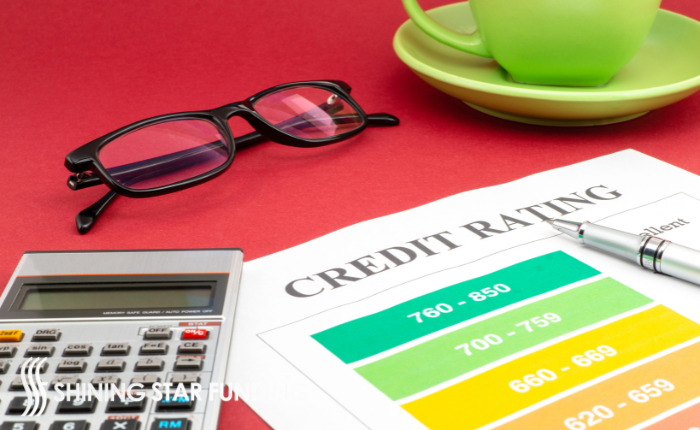
Before exploring specific loan programs, it is vital to demystify what a credit score actually represents and how underwriters view it. Your rating is essentially a numerical translation of your perceived risk as a borrower. Calculated using data compiled by the three major credit bureaus, this three-digit number reflects your payment history, the total amount of debt you owe relative to your limits, the length of your financial history, new inquiries, and the mix of your accounts.
Lenders use this figure as a baseline to predict how likely you are to default on a loan. A lower number often indicates past financial hardships, such as missed payments, high credit card balances, collections, or even bankruptcy. However, underwriters also recognize that a number does not tell your entire financial story. When preparing to buy, evaluating your report for errors, understanding your debt-to-income ratio, and knowing exactly how your rating is structured will give you the leverage needed to speak confidently with financing professionals. Many low-credit applicants also wonder how checking options impacts their rating trajectory, specifically asking does getting preapproved hurt your credit profile during preliminary processing review phases.
Minimum Credit Score to Buy a House
A common misconception is that there is a single, hard minimum rating required to purchase real estate across the board. In truth, the absolute minimum threshold depends entirely on the specific type of mortgage you apply for, the down payment you can afford, and the secondary risk-mitigating factors you bring to the table. While it is true that conventional guidelines favor higher scores, specialized government-backed programs are purposely engineered to assist individuals who are working with limited or damaged financial histories. To track how these lending rules evolve alongside broader housing shifts, exploring our full archive of homebuyer resources expands your market knowledge.
Can you successfully close on a house with a 500 credit score? The short answer is yes, but it comes with strict stipulations. When you are operating at the absolute baseline of the lending market, standard automated underwriting systems will rarely grant approval. Instead, your application will likely undergo manual underwriting, a meticulous process where a human reviewer examines your total financial health, looking at your income stability, savings, and overall patterns of financial responsibility to determine if you are a safe bet for a long-term loan.
Required Credit Scores for Different Types of Mortgage Loans
Different mortgage products cater to different financial profiles. To help you visualize where you stand, the following table outlines the typical baseline requirements and key characteristics of the primary financing options available in the housing market today.
| Mortgage Loan Type | Typical Minimum Score | Standard Down Payment Requirement | Primary Benefit for Borrowers |
|---|---|---|---|
| Conventional Mortgage | 620 | 3% to 5% (Higher for lower scores) | No government backing; private mortgage insurance can be cancelled later. |
| FHA Loan | 500 | 3.5% (with 580+) or 10% (with 500-579) | Extremely accessible; lenient credit and history guidelines. |
| VA Loan | No official minimum (often 580-620) | 0% Down | Excellent terms and zero down payment for military families. |
| USDA Loan | No official minimum (often 640 for auto-approval) | 0% Down | Geared toward rural development with affordable structures. |
| Jumbo Loan | 700 to 720+ | 10% to 20%+ | Designed for high-value properties exceeding standard limits. |
Conventional Mortgages
Conventional loans are the most widespread financing vehicles in the housing market, but they maintain some of the strictest standards. These loans are not backed by any federal agency, meaning private entities take on the entire risk of borrower default. Because of this exposure, standard guidelines dictate a rigid minimum credit score of 620 to even qualify for consideration.
If your current rating is sitting at a 525 credit score or lower, a conventional loan will not be a viable pathway for your immediate purchase. For asset-rich investors or self-employed individuals with substantial cash reserves, trying to force a conventional approval with a low score is often a misuse of time. Instead, focusing your energy on alternative loan products or dedicating a few months to aggressively preparing to buy by paying down revolving balances to push your rating past the 620 threshold is the most practical strategy. Gaining total control of your score behavior allows you to strategically shop for mortgage without hurting credit score scores over the long haul.
FHA Loans
For individuals explicitly exploring the realities of buying a house with a 500 credit score, the Federal Housing Administration program is the undisputed premier pathway. This government-backed option was specifically created to stimulate homeownership among borrowers who do not possess pristine financial records or massive down payments. This serves as a vital tool within our core catalog of FHA loans alternatives tailored for low-equity home buyers.
Under official federal guidelines, the system splits into two distinct tiers based on your rating:
- Scores of 580 and Above: Borrowers in this bracket can qualify for the maximum financing available, requiring a modest down payment of just 3.5%.
- Scores Between 500 and 579: If your rating falls within this lower tier, you are still legally eligible for an FHA loan, but you must offset the lender’s risk by providing a larger equity stake. This is where the standard 500+ Fha 10% down requirement comes into play.
Providing a ten percent down payment serves as a crucial compensatory factor. It proves to the underwriter that you have skin in the game and protects the lender against immediate losses if the property value fluctuates. While saving up a larger chunk of capital can take time, utilizing the 500+ Fha 10% down strategy is often the fastest, most predictable method for securing a residential property when your historical financial rating is at its absolute floor.
VA Loans
The Department of Veterans Affairs offers an incredibly robust mortgage program reserved exclusively for active-duty service members, veterans, and eligible surviving spouses. VA loans are highly sought after because they offer zero down payment financing and completely eliminate the requirement for monthly private mortgage insurance, saving borrowers hundreds of dollars every single month.
From an regulatory perspective, the VA does not actually enforce an absolute minimum score requirement to qualify for their backing. Instead, they require lenders to review the applicant’s entire financial profile via a holistic manual assessment. However, because private institutions are the ones actually funding the money, most individual lenders overlay their own internal requirements, typically looking for a 580 to 620. If you have military eligibility and are working with a lower score, finding a specialized lender who excels in manual underwriting is paramount to getting your loan approved.


USDA Loans
The United States Department of Agriculture sponsors a unique mortgage program intended to drive economic growth and homeownership in designated rural and suburban communities. Much like the VA program, a USDA loan provides a rare opportunity to purchase real estate with zero money down, coupled with competitive, below-market interest rates.
While the USDA does not establish a strict, definitive baseline score in its official federal handbook, it utilizes an automated underwriting platform that grants streamlined approvals for applicants carrying a 640 rating or higher. If you are preparing to buy a rural home with a lower score, your application will be subjected to intense manual review. Underwriters will carefully scrutinize your past twenty-four months of payment history, looking for consistent, on-time rent payments and stable utility histories to prove that your lower rating is an anomaly rather than a reflection of current habits. When assessing property options across distant geographic territories, mapping core factors of a good location remains an essential component for sustaining value.
Jumbo Loans
Jumbo loans represent the luxury tier of the residential financing market. These are non-conforming loans designed for high-value properties that exceed the maximum monetary limits set by federal regulators. Because the dollar amounts are exceptionally large, lenders face massive exposure if a borrower defaults on their payments.
Consequently, jumbo loans possess the most unforgiving qualification standards in the entire real estate industry. To even be considered for a jumbo mortgage, you generally need a stellar rating of at least 700 to 720, multiple years of meticulous financial documentation, a down payment ranging from fifteen to thirty percent, and substantial post-closing liquid reserves. For a borrower operating with a lower rating, jumbo financing is entirely out of reach until comprehensive financial restoration is completed.
Get Help for Life’s Big Milestones
Navigating the complex realities of purchasing real estate when your financial profile isn’t perfect can feel overwhelming. However, a lower score should not cause you to give up on your long-term wealth goals. Securing property under non-standard conditions requires patience, deep industry knowledge, and a commitment to professional preparation.
Surrounding yourself with the right team is the ultimate catalyst for success. By partnering with independent financial advisors, certified credit counselors, and specialized mortgage brokers who routinely handle manual underwriting, you can craft a personalized action plan. These professionals can help you identify legitimate grant programs for down payment assistance, audit your financial profiles for immediate score improvements, and ensure that when you finally take the leap into the market, you are fully protected, financially sound, and set up for long-term prosperity. To compare current programmatic options against moving market costs, checking our real-time rates page offers essential baseline clarity. Once your family is fully prepared to launch an underwriting application and secure pricing parameters, you can easily apply now to lock in your initial qualification records with our team.
Frequently Asked Questions
USDA loans are more restrictive and typically require around a 640 or higher credit score for smooth automated approval. Lower scores may require manual underwriting along with strict income and rural property eligibility requirements. A 500 score makes USDA loan approval exceptionally difficult, though not completely impossible in rare circumstances.
VA loans technically have no official minimum credit score requirement established by the federal government. However, individual private mortgage lenders usually enforce internal guidelines preferring scores between 580 and 620 or higher. Securing approval with a 500 score depends heavily on finding a specialized lender equipped for rigorous manual underwriting.
Yes, an FHA loan is the most realistic option for low-credit buyers. Federal guidelines mandate a 500 credit score minimum with a ten percent down payment requirement. Once a homebuyer reaches a credit score of 580 or higher, the down payment requirement drops to the standard three and a half percent baseline.
To optimize your mortgage approval odds, focus on paying down revolving credit card balances, auditing and fixing credit report errors, and completely avoiding new debt inquiries. Additionally, maintaining a stable source of employment income and saving a larger down payment will significantly strengthen your underwriting profile.
Yes, buying a house with a 500 credit score is entirely possible, though your financing choices will be strictly limited. While traditional conventional financing vehicles are unavailable at this tier, government-backed programs like FHA loans provide an accessible entry path depending on your broader debt-to-income and employment profile.
Conventional mortgages are generally not available for applicants carrying a 500 credit score. Standard conventional guidelines require a rigid minimum score of 620 to qualify for automated underwriting, while securing optimal interest rates usually requires scores of 700 or higher.
Jumbo loans are non-conforming products with the hardest qualification standards in the industry. They strictly require a minimum credit score of 700 to 720, massive down payments, and deep liquid reserves. Consequently, qualifying for a jumbo loan with a 500 credit score is completely unrealistic.
The primary trade-offs of a low-credit mortgage include significantly higher interest rates, fewer product options, and more restrictive guidelines. Additionally, operating in the 500 score range requires a larger upfront cash commitment, such as the mandated ten percent down payment baseline for FHA parameters.
The primary benefit is gaining the immediate opportunity to build long-term housing equity instead of wasting capital on rent. Government-backed programs like FHA loans make entry possible even within a low credit score bracket, allowing your payment history to organically improve your credit profile over time.
There is no single universal minimum credit score requirement for all home loans. General industry benchmarks require a 500 minimum for FHA options with a larger down payment, a 620 baseline for conventional loans, a preferred 640 tier for USDA automated paths, and variable lender overlays for VA solutions. Therefore, a 525 credit score may still qualify under specific FHA conditions.

527 Sycamore Valley Rd W, Danville, CA 94526
Toll Free Call : (866) 280-0020
For informational purposes only. No guarantee of accuracy is expressed or implied. Programs shown may not include all options or pricing structures. Rates, terms, programs and underwriting policies subject to change without notice. This is not an offer to extend credit or a commitment to lend. All loans subject to underwriting approval. Some products may not be available in all states and restrictions may apply. Equal Housing Opportunity.
Interactive calculators are self-help tools. Results received from this calculator are designed for comparative and illustrative purposes only, and accuracy is not guaranteed. Shining Star Funding is not responsible for any errors, omissions, or misrepresentations. This calculator does not have the ability to pre-qualify you for any loan program or promotion. Qualification for loan programs may require additional information such as credit scores and cash reserves which is not gathered in this calculator. Information such as interest rates and pricing are subject to change at any time and without notice. Additional fees such as HOA dues are not included in calculations. All information such as interest rates, taxes, insurance, PMI payments, etc. are estimates and should be used for comparison only. Shining Star Funding does not guarantee any of the information obtained by this calculator.
Privacy Policy | Accessibility Statement | Term of Use | NMLS Consumer Access
CMG Mortgage, Inc. dba Shining Star Funding, NMLS ID# 1820 (www.nmlsconsumeraccess.org, www.cmghomeloans.com), Equal Housing Opportunity. Licensed by the Department of Financial Protection and Innovation (DFPI) under the California Residential Mortgage Lending Act No. 4150025. To verify our complete list of state licenses, please visit www.cmgfi.com/corporate/licensing